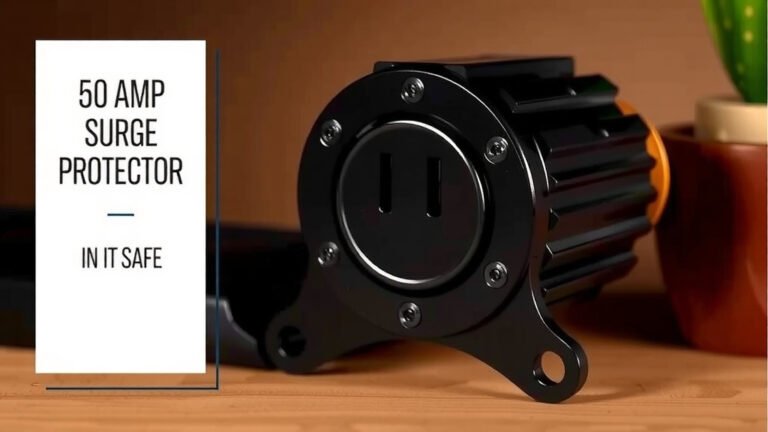
How Long Do RV Surge Protectors Last? A Complete Guide
An RV surge protector typically lasts 5 to 10 years, but that depends on how often you camp and the quality of the unit you buy. A cheap model might quit after a few seasons, while a high-end hardwired unit can easily serve you for a decade or more. We found that most failures happen from power surges, not age, so your protector could last longer than you think.
You rely on this small box to guard your rig’s electrical system, fridge, and air conditioner from nasty campground power spikes. Think of it as a bouncer for your RV’s wiring — it takes the hit so your expensive appliances don’t have to. Weather events and faulty pedestal wiring are the real enemies, and they can shorten its life in a single afternoon.
- Most RV surge protectors last 5 to 10 years with normal use.
- Hardwired models generally outlast portable plug-in versions.
- Repeated power surges or lightning strikes can kill a unit instantly.
- Look for a replacement indicator light to know when it’s done.
- Testing it yearly and keeping it dry extends its lifespan significantly.
Below, we break down the exact factors that decide how long your protector will survive, plus simple signs it’s time to swap it out for a new one. Let’s walk through what we found so you can protect your rig with confidence.
What Actually Determines Your Surge Protector’s Lifespan
You can’t just mark a calendar date for when your RV surge protector will quit. The truth is, its life depends on several real-world factors you face every time you plug in. We found that build quality matters more than anything else. A $40 basic model uses cheaper components that wear out faster. A $200+ unit from a trusted brand like Hughes or Progressive Industries uses heavy-duty metal oxide varistors (MOVs) that absorb more energy before failing.
Your camping habits play a huge role too. If you’re a full-timer living in your rig, your protector works much harder than someone who camps six weekends a year. Think of it like a car — more miles mean more wear and tear.
The environment matters just as much. Camping in the hot Southwest desert or humid Gulf Coast adds stress to the internal electronics. Heat is especially brutal on surge protectors. We found that extreme temperatures can degrade the internal components even when the unit isn’t actively working.
How Power Surges Shorten the Clock
Here’s where things get tricky. Every surge protector has a finite capacity for absorbing energy. That capacity is measured in joules. Each surge you experience burns up some of those joules. A small spike from a nearby appliance uses a little. A massive surge from a lightning strike nearby can use it all at once.
Most quality RV surge protectors rate between 1,000 and 3,000 joules. Once those joules are spent, the unit is done. It won’t protect you anymore. The scary part? Many protectors fail silently. They look fine on the outside but offer zero protection on the inside.
Portable vs. Hardwired: Which Lasts Longer
We compared both styles and found a clear winner for longevity. Hardwired surge protectors generally outlast portable ones. Why? Because they’re installed inside your RV’s electrical bay. They stay dry, stay cool, and never get bumped around in your storage compartment.
Portable units hang off your power pedestal. They face rain, sun, wind, and accidental kicks. That’s a tough life for any piece of electronics. Many experts say portable units fail faster because of physical damage and moisture exposure, not electrical issues.
That doesn’t mean portable units are bad. They’re easier to install and you can move them between RVs. Just know you’ll likely replace them sooner than a hardwired unit. If you’re handy with basic electrical work and plan to keep your RV long-term, hardwired is the better value.
Signs Your Surge Protector Has Given Up the Ghost
Your RV surge protector won’t always announce its death. In fact, many keep working as a basic power cord even after the protection circuits fry. That’s the sneaky part. You might still get power, but you’ve lost all protection.
The good news? Most quality units have a built-in diagnostic light or display. When that light changes color or the display shows an error code, it’s time to take notice. Here’s what to watch for:
- Indicator light turns red or doesn’t light up when plugged in
- Display screen shows an error code like “E1” or “fault”
- Unit feels unusually hot to the touch after normal use
- You hear a faint buzzing or crackling sound
- Visible burn marks, melted plastic, or a burnt smell
- It trips the breaker at the pedestal repeatedly
We found that burning smell is the big red flag. That means a component failed catastrophically and you could be looking at a fire hazard. Unplug it immediately and don’t use it again.
Why the “Replace” Light Is Your Best Friend
High-end surge protectors from brands like Progressive Industries include a small “replace” or “protected” indicator. When the internal MOVs are gone, the light switches from green to red. That’s your cue to buy a new unit. It takes the guesswork out of maintenance.
Cheaper models often skip this feature. They just quietly stop working. If you bought a budget unit without a diagnostic display, we recommend replacing it every 3 to 5 years as a safety precaution. That’s not an aggressive schedule — it’s just being honest about what the internal components can handle.
How Weather Wrecks Your Protector Faster Than Anything
Mother Nature doesn’t care about your surge protector’s warranty. We found that weather events are the #1 cause of premature failure. Lightning is the obvious villain, but it’s not the only one.
High humidity and rain can seep into portable units. Even if they’re rated weather-resistant, that rating fades over time. Gaskets dry out. Seals crack. Water gets in and shorts the whole board. Many experts recommend unplugging your portable protector during heavy rainstorms, even if you’re still camping.
Extreme heat is just as damaging. Direct afternoon sun on a black plastic surge protector can push internal temperatures past safe limits. That heat stress weakens solder joints and degrades capacitors. Try to keep portable units shaded or use a hardwired model that lives inside your rig.
Beware the Faulty Pedestal Wiring Trap
Some campgrounds have questionable electrical wiring. We found that bad pedestals can damage your surge protector even without a surge. Open neutrals, reversed polarity, and high voltage are all common issues.
When a pedestal has poor wiring, your surge protector works overtime just to keep your RV safe. It might trip its own breaker or shut off power to protect your appliances. That’s good for your RV but hard on the protector. Each fault event consumes some of its internal capacity.
Quality surge protectors with built-in miswiring detection will refuse to pass power if the pedestal is bad. That’s a feature worth paying for. It saves your appliances and tells you the pedestal is the problem, not your gear.

Simple Habits That Add Years to Its Life
You don’t need to be an electrician to extend your surge protector’s lifespan. A few small habits make a big difference. We found that yearly testing is the single best thing you can do. Many quality units have a test button on the side. Press it while plugged in — if it doesn’t trip, something’s wrong.
Here’s our quick checklist for keeping your protector alive longer:
- Test the surge protector at the start of every camping season
- Keep portable units dry and covered when not in use
- Store it indoors during winter months
- Wipe the prongs with a dry cloth to remove corrosion
- Unplug during severe lightning storms
- Replace after any direct lightning strike nearby
That last one is important. Even if the unit still passes power, a nearby strike could have partially damaged its internal components. Don’t gamble with your RV’s electrical system. If lightning hits close, replace the protector.
Joule Rating Explained in Plain English
You’ve probably seen “joules” listed on the box and wondered what it means. Simply put, joules measure how much energy the protector can absorb before dying. More joules = longer life and better protection.
Here’s a quick comparison based on what we found in the market:
| Protector Type | Typical Joule Rating | Expected Lifespan |
|---|---|---|
| Budget portable | 800 – 1,200 joules | 2 – 4 years |
| Mid-range portable | 1,500 – 2,000 joules | 4 – 6 years |
| High-end portable | 2,500 – 3,000 joules | 6 – 8 years |
| Hardwired | 2,000 – 3,000+ joules | 8 – 10+ years |
Numbers aren’t the whole story. A unit’s clamping voltage and response time matter too. But if you’re comparing two units, higher joules generally mean better longevity. Spend a little more upfront to avoid replacing it every other season.
When It’s Time to Just Buy a New One
We get it. You’re not thrilled about dropping $150 to $300 on a new surge protector. But consider what’s at stake. Your RV’s electrical system, appliances, and potentially the whole rig are on the line. Replacing a surge protector is way cheaper than replacing a fridge or a control board.
Research from the National Electrical Manufacturers Association (NEMA) points out that surge protection devices have a finite lifespan based on the number and size of surges they encounter. There’s no such thing as a “lifetime” surge protector. Any manufacturer claiming theirs lasts forever is selling you a story.
If your unit is more than 7 years old and you camp regularly, we’d say just replace it proactively. You don’t need to wait for a failure. Think of it like changing the tires on your tow vehicle before they go bald — you know it’s going to happen, so why wait for the blowout?
Does Your RV Even Need a Surge Protector?
Short answer: yes. RV park power is notoriously inconsistent. We found that most campgrounds don’t test their pedestals regularly. That means you’re plugging into a gamble every time you hook up. A surge protector is a small insurance policy for a very expensive asset.
Modern RVs are packed with sensitive electronics. Smart TVs, inverter refrigerators, converter chargers, and even your thermostat have circuit boards. Those boards are highly vulnerable to power spikes. A surge protector is one of the cheapest upgrades you can make for long-term RV ownership.
If your RV is older and doesn’t have many electronics, you might get away without one for a while. But why risk it? A $200 surge protector once saved us from a pedestal that sent 240 volts through the line instead of 120. Without it, that would have fried every appliance in the rig.
Conclusion
Your RV surge protector won’t last forever. We found that 5 to 10 years is the realistic window for most quality units. The real variable is how many surges it absorbs, not just the calendar. A cheap portable model might quit in a few seasons, while a hardwired unit can push past a decade.
Don’t wait for a burnt smell or a dead display to take action. Test it yearly and watch for the indicator light. If your unit is over 7 years old or you camp full-time, replace it proactively. It’s the cheapest insurance you’ll ever buy for your rig.
Before your next trip, check your protector’s joule rating and condition. If it looks tired, swap it out. Your RV’s electrical system is worth the $200 investment.
Frequently Asked Questions
Can an RV surge protector be repaired or is replacement always required?
You can’t repair a surge protector. The internal MOVs are sealed inside the unit and aren’t serviceable. Once they’re spent, replacement is the only safe option. Opening the case voids the warranty and risks electrical shock, so don’t try it.
Does leaving your RV surge protector plugged in all the time shorten its life?
Yes, it can. Constant connection means constant exposure to small fluctuations in power. Even minor voltage changes burn a tiny bit of joule capacity. We recommend unplugging your portable unit when you’re not actively camping or storing your RV.
Will a surge protector still pass power after it stops protecting?
Unfortunately, yes. Many units fail silently and continue acting as a basic power cord. You’ll still get electricity, but zero surge protection. That’s why the diagnostic light on quality units is so important — it’s the only way to know for sure.
Does a higher-priced surge protector always last longer?
Not always, but usually. Higher prices often mean better components, higher joule ratings, and weatherproofing. That said, a mid-range unit from a trusted brand can outlast a cheap one from a no-name company. Focus on joule rating and brand reputation, not just price.
Can you test an RV surge protector with a multimeter?
A multimeter can check if power is passing through, but it cannot test the surge protection capacity. The internal MOVs need specialized equipment to verify. The built-in test button on quality units is your best bet for a quick check at home.