RV Surge Protector Looks and How to Spot One
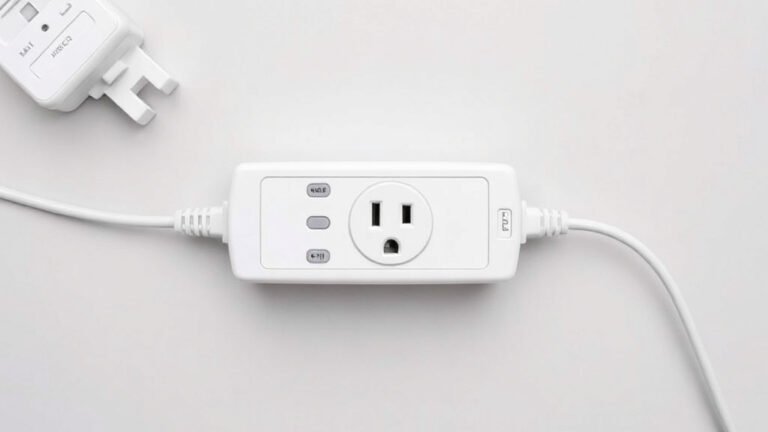
An RV surge protector is a compact electrical box that plugs into your campsite pedestal or your RV’s power cord, acting like a power strip with a serious brain. We found that it’s designed to detect bad power and cut the flow before it can damage your rig’s expensive electronics. It’s your first line of defense against dirty electricity.
You’ll spot them in a couple of main styles, but the most common type looks like a heavy-duty plug or adapter with a digital display. Some models are hardwired directly into your RV, while others are portable units you plug in manually. They keep your microwave, fridge, and AC safe from power surges and low voltage issues.
- Portable units look like big plug adapters with a screen showing voltage and error codes.
- Hardwired models are installed inside your RV, typically near the breaker panel.
- Most have a weatherproof cover to keep rain and dust out.
- The display glows and shows you exactly what’s wrong with the park’s power.
- They are usually 4 to 8 inches long, making them easy to spot in your cord compartment.
Stick with us, and we’ll walk you through the different shapes and features so you know exactly what to look for at the store or in your neighbor’s campsite setup.
Recognizing an RV Surge Protector on Sight
You will almost always spot an RV surge protector as a bulky adapter sitting between your shore power cord and the campground pedestal. We found that the design is intentionally chunky so it can house all the internal circuitry that monitors your power.
Most portable units are black or white, roughly the size of a thick paperback book. They have a standard 30-amp or 50-amp plug on one end and a matching receptacle on the other. A glowing digital screen sits on the front face, showing you voltage readouts or error codes.
Hardwired models look completely different. They resemble a small electrical junction box mounted near your breaker panel. You won’t see a screen on these unless they have a remote display option. Instead, they hide behind a metal or plastic cover and connect directly into your RV’s wiring.
The Portable Plug-In Style You See at Campgrounds
This is the classic image most RVers picture when they hear “surge protector.” It dangles off the power pedestal like a heavy puck. We found that these units often have a short, thick cord or a rigid housing that supports the weight without bending the pedestal outlet.
You’ll notice a few distinct physical traits that separate a surge protector from a simple dogbone adapter:
- A weatherproof rubber boot or flip cover over the screen and buttons.
- A thick, molded casing that feels rugged and slightly heavy.
- A digital display that lights up the moment you plug it in.
- Twist-lock rings on the 50-amp versions, holding the connection snug.
- Small status LEDs that glow green when power is clean.
- A pigtail cord (usually 12 to 18 inches) on some models, letting the unit hang freely.
These units are built to survive rain, mud, and clumsy neighbors. We found that most have a weatherproof rating that keeps the internals dry even when exposed to a downpour. Many experts say a surge protector without a sealed housing is not worth your money.
What the Display Screen Tells You
That little glowing screen is the window into your power situation. It cycles through readings like voltage, amperage, and frequency. We found that newer models even display the exact fault code when something goes wrong.
Some screens show a single number at a time, rotating every few seconds. Others show multiple readings on one screen. You will see letters like “E1” or “F” paired with numbers to indicate specific problems, such as reverse polarity or open ground. You do not need to memorize these codes — the manual explains them all.
The Hardwired Unit Hiding Inside Your RV
A hardwired surge protector is not something you plug in. It is permanently mounted in your RV’s electrical system. We found that these are popular with full-timers who want a set-and-forget solution.
Visually, a hardwired unit looks like a metal junction box with conduit entering from the top and bottom. It has a removable faceplate so an electrician can access the circuit board inside. There is no visible screen or buttons, which makes it look just like any other electrical component in your rig.
Some hardwired models come with a small remote display panel. That panel looks like a tiny digital thermometer, about 2 by 3 inches, that mounts on a wall near your kitchen or bedroom. It gives you the same voltage readouts without digging into the electrical bay.
Where You Will Find It Installed
Most often, the hardwired unit sits within two feet of your breaker panel. It might be tucked into the same compartment that houses your power converter. We found that manufacturers install these units inline, meaning the incoming power passes through the gadget before reaching your breakers.
You might need a flashlight to see it, but the giveaway is the extra wiring and the distinct box shape. It won’t have a standard household outlet on it. It is purely a pass-through device, and it looks the part.
Differences Between a Surge Protector and an EMS
People often confuse surge protectors with Electrical Management Systems, and visually, they look nearly identical. We found that the physical size and screen layout are often the same. The difference lives inside the circuitry, not the shell.
A standard surge protector only handles sudden voltage spikes. It is like a shield that blocks one big hit. A full EMS does that and also checks for low voltage, high voltage, reverse polarity, and open grounds. Many experts say an EMS is the smarter buy, even though it costs more.
From the outside, you can sometimes tell them apart by the number of buttons. EMS units often have a “Test” or “Info” button to cycle through diagnostics. Basic surge protectors usually just have a screen with no way to change what it displays.
| Feature on the Outside | Basic Surge Protector | EMS (Electrical Management System) |
|---|---|---|
| Digital display | Shows voltage only | Shows voltage, amps, errors |
| Buttons | None or a power switch | Test and menu buttons |
| Error codes | May show a single code | Full LCD readout with text |
| Shut-off ability | Blocks surges only | Cuts power on any fault |
| Physical size | Compact and light | Often slightly larger due to relays |
When you look at the two side by side, the EMS tends to have a more elaborate face. You will notice extra indicators and a longer user manual. The casing is still the same heavy-duty plastic or metal, but the internals are far more complex.
Different Plug Shapes for Different Power Needs
Surge protectors come in two main plug configurations, and you must match them to your RV’s power cord. We found that buying the wrong shape is one of the most common mistakes new RVers make.
A 30-amp unit has a three-prong plug that looks like a regular household plug but slightly larger. The prongs are angled, with one round pin and two flat blades. These are common on smaller trailers and pop-up campers.
A 50-amp unit has a four-prong plug that looks like a heavy industrial connector. It has two flat blades, one round pin, and one L-shaped pin. These are found on larger motorhomes and fifth wheels that run multiple air conditioners.
How to Spot the Right One Quickly
Check the end of your shore power cord before buying anything. We found that the plug shape is your biggest clue. A 50-amp plug is physically bigger and will not fit into a 30-amp receptacle, and vice versa. There is no way to force it, which is actually a safety feature.
Some portable surge protectors come with interchangeable plug heads. We found that these are handy if you plan to upgrade your RV later. The unit is still bulky, but the interchangeable head attaches with a twist-lock collar, letting you swap between 30 and 50 amps.
You will also see adapter pieces that convert a 50-amp plug down to a 30-amp outlet. These look like extra cylinders stacked on the surge protector. We found that stacking multiple adapters is risky because it adds resistance to the circuit. Keep the chain as short as possible.
Pedestal-Side Versus RV-Side Units
Portable surge protectors can sit on either end of your power cord. The pedestal-side unit is the one that plugs directly into the campground outlet. It is the most common style, and it is the one you will see dangling from the metal box at any RV park.
An RV-side unit plugs directly into your RV’s power inlet, with the cord connecting to the pedestal. We found that RV-side models are less common because they leave the protector swinging from the side of your rig. They are still easy to recognize — they look like a short nub of plastic sticking out from your RV’s exterior outlet.
Materials and Build Quality You Can See and Feel
The casing material tells you a lot about whether a surge protector will last. We found that the best units use a thick, impact-resistant plastic that feels almost rubberized. Cheaper models feel thin and brittle, like a flimsy extension cord end.
Look for a heavy strain-relief boot where the cord exits the housing. This is a rubber collar that prevents the wire from bending sharply at the connection point. Many experts say physical wear at this spot is the number one cause of failure outside the electronics themselves.
On hardwired models, the build quality shows in the terminals and mounting brackets. We found that sturdy metal brackets and properly torqued screws signal a unit that was designed to stay put for years. Loose plastic clips or flimsy hinges are red flags.
Weatherproofing Features That Stand Out
Most portable surge protectors have a flip-down cover that shields the display and buttons. The cover is usually made of translucent plastic so you can read the screen without opening it. We found that a rubber gasket around the cover edge keeps moisture out effectively.
Look for a unit with a sealed display window rather than an open bezel. We found that water tends to pool on the top of the housing, so a raised lip around the screen helps direct runoff away. A built-in mounting tab on the bottom lets you hang the unit off the pedestal hook, keeping it off the wet ground.

Size and Weight Comparison Across Popular Models
Surge protectors are not all the same size, even within the same amperage rating. We found that 30-amp portable units measure roughly 3 to 5 inches deep and weigh about 1 to 2 pounds. The 50-amp versions are larger, often 5 to 7 inches deep and up to 3 pounds.
Hardwired units are bulkier, starting at about the size of a shoebox. They weigh between 4 and 8 pounds depending on the internal transformer size. The remote display panels are tiny by comparison — about the size of a matchbox.
Portable units with built-in Bluetooth tend to have a slightly thicker profile. We found that the antenna and wireless module add about a quarter inch to the depth. The trade-off is that you can check power status from your smartphone without walking to the pedestal.
Button Layout and User Interface
Beyond the screen, the buttons give you clues about the unit’s function. A simple surge protector might have a single reset button, similar to a GFCI outlet. It sits flush with the housing to keep water out.
EMS units have more controls. You will see a small navigation set with up, down, and select buttons. These are recessed and rubber-covered so they are easy to press even with gloves. We found that a labeled “Test” button that is recessed deeper than the others is a sign of a quality, water-resistant design.
Some high-end units swap physical buttons for a touch-sensitive area under the display. This looks sleek but can be hard to use when the screen gets wet. Many experts still prefer physical buttons for reliability.
Built-In Convenience Features You Can See
Modern surge protectors add small visual cues that make them stand out from older models. A built-in cord wrap is a common feature on portable units. It looks like two notches on the sides of the housing, letting you coil the attached cord around the body for storage.
Some units include a small light that tells you if the pedestal ground is wired correctly without needing the display. This is often a tiny LED slot near the plug end. We found that a green glow means good to go, while red flashes mean something is wrong.
A few premium units have a built-in bottle opener on the side, which is mostly a novelty but makes them easy to identify from a distance. You will rarely see this on hardwired models.
Smart Features That Add a Screen Interface
Bluetooth-enabled models have the same physical screen, but they also connect to your phone. We found that the unit itself still looks like a standard surge protector, just with a small indicator light that blinks when it is in pairing mode.
Smart hardwired units might have a small Wi-Fi antenna protruding from the box. It looks like a short stubby plastic nub, about the size of a thimble. This is the easiest way to tell a smart model from a basic one when it is mounted in your electrical bay.
Common Lookalikes You Might Mistake for a Surge Protector
Several electrical gadgets look similar but do not provide surge protection. A simple
Conclusion
You can spot an RV surge protector by its chunky, rugged housing and glowing digital display. Portable models hang right at the pedestal, while hardwired units hide near your breaker panel. The plug shape tells you the amperage, and the buttons or screen reveal whether you have a basic protector or a full EMS.
Before your next trip, walk out to your RV and check your shore power cord plug. That single look tells you exactly which 30-amp or 50-amp unit you need. Grab a weatherproof model with a sealed display, and you will keep your rig’s electronics safe for years.
Frequently Asked Questions
Can I leave my RV surge protector plugged in during rain?
Yes, you can leave it plugged in during rain if it has a weatherproof rating. Look for a sealed housing and a rubber cover over the display. The unit is designed to handle wet conditions, but you should still avoid submersion in puddles.
Will a surge protector work with a generator?
Yes, most portable surge protectors work fine with generators. You will plug the generator cord into the surge protector just like a pedestal. The unit will show you the voltage output so you can confirm the generator is producing clean power.
How do I know if my surge protector is bad?
You will see a fault code on the display or the screen will stay dark. Some units have a test button you can press to run a self-check. If the unit fails to show readings when plugged into good power, it is time to replace it.
Do I need a surge protector for a travel trailer?
Yes, you absolutely need one for a travel trailer. Your trailer’s fridge, converter, and any electronics are just as sensitive as those in a big motorhome. A surge protector is a small investment compared to the cost of replacing fried appliances.
What is the lifespan of an RV surge protector?
Most quality units last between 5 and 10 years with normal use. The internal components degrade slightly each time they absorb a surge. You should replace the unit after a major surge event or if the display starts acting glitchy.