Surge Protector vs EMS for RV: Key Differences
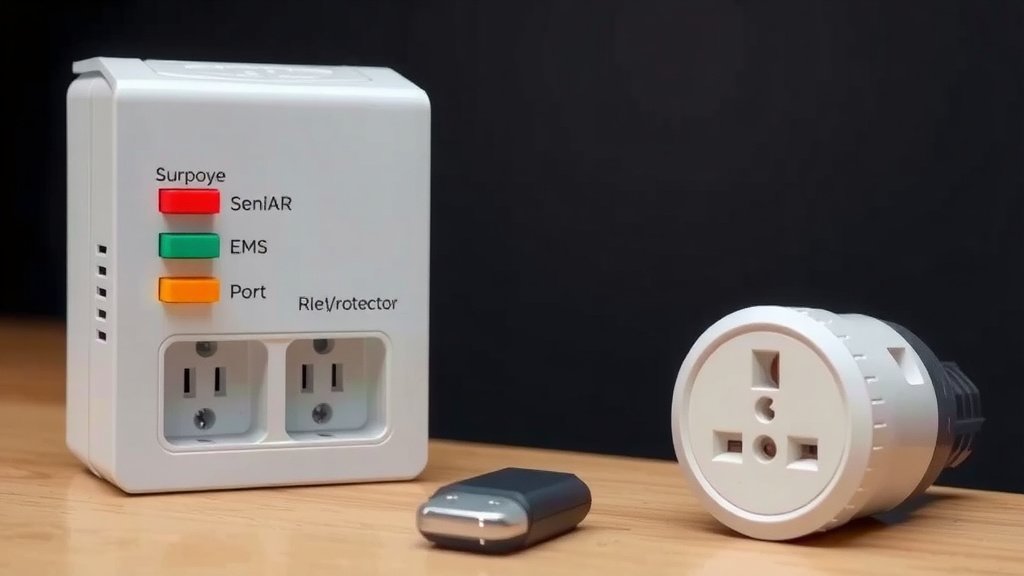
For RV power protection, a surge protector and an EMS (Energy Management System) are not the same thing. A surge protector only stops sudden power spikes, while an EMS is a surge protector that also checks the wiring before it powers up your rig. You need the EMS if you want to catch dangerous faults like low voltage, open neutrals, and reversed polarity that can fry your RV’s electronics.
We found that many RVers confuse these two devices, and it can be a costly mistake. Both plug into your shore power pedestal, but they offer very different levels of safety. In simple terms, you are buying peace of mind, but you have to decide how much coverage you actually need for your electrical system.
- A surge protector only handles high-voltage spikes (like lightning strikes or grid surges).
- An EMS includes surge protection plus a built-in electrical inspector that checks for bad pedestal wiring.
- An EMS shuts off power if it detects an open neutral, high/low voltage, reverse polarity, or a bad ground.
- Basic surge protectors often just sacrifice themselves to absorb a spike without telling you why there was a problem.
- Bottom line: For full protection, you want an EMS; a simple surge protector is a bare-minimum safeguard.
Below, we break down the exact differences, what each device physically does, and give you a clear recommendation for your RV so you can power up without worry.
Comparing RV Power Protection: Surge Protector vs. EMS
You plug into a pedestal at a campground and hope everything is fine. You are trusting someone else’s wiring with your expensive rig. That is a big risk. We found that many RV owners skip this step because they do not understand the difference between these two devices. Let’s fix that right now.
Think of it like this. A surge protector is a seatbelt. It helps in a crash but does nothing to stop the crash. An EMS is a full-time driving instructor. It watches the road, checks for danger, and slams the brakes before you hit a pothole. You want the instructor on your side.
What a Basic Surge Protector Does for You
A basic surge protector has one job. It absorbs or diverts a sudden burst of high voltage. This usually happens during a lightning strike or when the power grid hiccups. Without it, that spike travels straight into your converter, microwave, and TV. The surge protector acts like a fuse to stop that wave.
Here is the catch. Most surge protectors are “sacrificial.” They take the hit once and their internal metal oxide varistors (MOVs) get damaged. Sometimes you do not even know they failed. You might be plugged in with zero protection and not realize it until your appliance dies (Consumer Reports).
Why a Surge Protector Cannot Check Your Wiring
Surge protectors are blind to wiring problems. They do not check the pedestal before letting power through. If the campground has a reversed polarity or an open neutral, the surge protector just sits there. It cannot tell you that the ground wire is missing. It only reacts to voltage spikes, which are a completely different problem.
Many experts say that pedestal wiring issues are more common than power surges at campgrounds. You are more likely to run into a loose connection than a lightning strike. A basic surge protector gives you a false sense of security in these situations.
The “Silent Failure” Problem
We found that the biggest issue with surge protectors is their silent failure mode. The MOVs inside them wear out over time. Every minor spike burns them down a little. After a few years, the protection is gone. Unless you buy a unit with an indicator light, you will never know. You are driving with a seatbelt that is already cut.
What an EMS Adds to the Equation
An EMS, or Energy Management System, is the smart choice here. It does everything a surge protector does, but it adds a layer of electrical inspection before you get power. It tests the pedestal constantly. If something is wrong, it cuts the power before it even reaches your RV. This is a massive difference in safety.
We broke down the key features of an EMS below. These are the checks it performs every single time you plug in.
- High voltage protection: Shuts off power if the pedestal pushes more than 130 volts.
- Low voltage protection: Shuts off power if the pedestal drops below 104 volts.
- Open neutral detection: Catches a missing neutral wire, which can cause huge voltage swings.
- Reversed polarity detection: Catches hot and neutral wires that are wired backward.
- Bad ground detection: Ensures the ground wire is actually connected to the earth.
- Surge suppression: Offers the same spike protection as a basic unit.
The EMS uses a relay to disconnect your RV. It is like a smart switch that opens the circuit when it sees a problem. This happens in milliseconds, often before your appliances even notice a flicker.
Why Voltage Fluctuations Are Dangerous
Low voltage is the silent killer of RV appliances. It happens when the campground is crowded and everyone runs their air conditioners at once. The voltage drops below 110 volts. Your air conditioner motor works harder to spin. It draws more amperage. The motor overheats and eventually burns out.
An EMS monitors this constantly. If the voltage drops too low for too long, it shuts off power to the air conditioner. You might sweat for a bit, but you save your compressor. We found that an EMS is the only device that protects against this specific type of damage.
Key Differences You Need to Know
We found that RVers often get confused about the terminology. Let’s clear up the difference between a surge protector, a power monitor, and an EMS. They are not the same price, and they are not the same level of safety.
| Feature | Surge Protector | Power Monitor | EMS (Energy Management System) |
|---|---|---|---|
| Stops power spikes | Yes | Yes | Yes |
| Alerts you to wiring errors | No | Yes | Yes |
| Shuts off power automatically | No | No | Yes |
| Protects against low voltage | No | No | Yes |
| Protects against high voltage | No | No | Yes |
| Price range | $50 – $100 | $150 – $250 | $300 – $700 |
A power monitor is a middle ground. It shows you the errors on a digital display but relies on you to fix the problem. If you are asleep, a power monitor cannot save you. An EMS acts on its own. That is the critical difference in this comparison.
Which One Should You Buy for Your Rig?
We recommend the EMS for almost every RV owner. The extra cost is a small price compared to replacing a refrigerator or an air conditioning unit. A basic surge protector is better than nothing, but only if you are on a strict budget and you fully understand the risks.
Think about the last time you parked at a state park or a rural fairgrounds. The wiring there might be decades old. You cannot see inside the pedestal. An EMS gives you eyes on the inside, and that is worth every penny.
When a Basic Surge Protector Might Be Enough
There is one exception. If you only camp at brand-new, high-end resorts that are less than five years old, you might be fine with a surge protector. You are still taking a risk, but the wiring is more likely to be up to code. However, we found that even new parks can have faulty installation issues.
Also, if you boondock exclusively and never plug into shore power, you do not need either device. You are running on batteries and solar. These devices only matter when you connect to an external power source.
Hardwired vs. Portable EMS Units
You have two options for installation. A portable EMS plugs directly into the pedestal. You plug your shore power cord into the EMS. It is easy to move and use on any RV. The downside is that it is a target for thieves, so you should lock it to the pedestal.
A hardwired unit mounts inside your RV. It is installed near your breaker panel and is protected from the weather. It is always with you, which we found to be a major convenience. You never have to worry about bending down to plug in a heavy box.
Understanding the Price Difference
We found that the price difference often scares people away. You can buy a basic surge protector for under a hundred bucks. A good EMS from a trusted brand like Progressive Industries or Hughes Autoformers costs around four hundred dollars. That is a big jump for a small box.
But let’s do the math. A single new RV air conditioner costs over one thousand dollars installed. A new refrigerator costs over two thousand dollars. A surge protector does not protect either of those from low voltage. An EMS does. The EMS pays for itself the first time it saves your AC unit from a brownout.
A Quick Checklist Before You Plug In
Once you decide which device to use, follow this checklist every time you set up camp. It takes just a few minutes and prevents costly mistakes.
- Plug your EMS or surge protector into the pedestal first.
- Wait for the device to complete its diagnostic check (usually 15-30 seconds).
- Read the error codes if it does not give you power.
- Check the voltage display on a sunny day when everyone is running AC.
- Keep your portable unit locked to the pedestal with a cable lock.
- Unplug the device before you leave the site to avoid damage.
This process becomes a habit quickly. You will start to feel uneasy if you ever plug in without checking the power first. That is a good thing. It means you respect the electricity that powers your home on wheels.
Common Misconceptions About Power Protection
Many RVers think that a surge protector is a “set it and forget it” device. We found that this is simply not true. These devices need attention and sometimes maintenance. Portable units should be checked for water intrusion. Hardwired units should be inspected by a professional if you notice errors.
Another myth is that you only need protection during thunderstorms. Actually, the most dangerous time is during regular operation when the grid is strained. Heatwaves cause brownouts. Windstorms cause lines to touch. Your EMS protects you in all these scenarios, not just lightning.
What About Generator Power?
If you use a generator, you still need an EMS. Generators can produce unstable power, especially cheap inverter models. They can fluctuate in voltage and frequency. An EMS will catch these fluctuations and protect your electronics. Plug your generator into your EMS just like you would plug into a pedestal.
We found that some RVers think their generator is clean power. That is not always true. A non-inverter generator produces “dirty” power that can damage sensitive electronics like laptop chargers. Your EMS is the only thing standing between your generator and your TV.
Making Your Final Decision on Protection
You have to decide what your RV is worth to you. We found that most people spend thousands on upgrades like solar panels and lithium batteries. Skimping on power protection is like buying a brand new truck and skipping the insurance. It just does not make sense.
Start with an EMS if you can afford it. Look for a model that has a lifetime warranty and a replaceable surge module. This saves you money in the long run because you only replace the internal cartridge, not the whole unit. It is the best way to protect your rolling home.
Conclusion
You now know the difference between a surge protector and an EMS for your RV. A surge protector handles spikes. An EMS handles spikes plus dangerous wiring faults, low voltage, and high voltage. That extra protection is what saves your air conditioner and refrigerator from early failure.
We recommend you go with an EMS if your budget allows. The cost is a fraction of what you would pay to replace a single appliance. You get real peace of mind every time you plug into a new pedestal. That is worth the upgrade.
Your next step is simple. Measure your shore power plug type and pick a portable or hardwired EMS from a trusted brand. Install it before your next trip. You will camp with confidence knowing your rig is protected.
Frequently Asked Questions
Can I use a surge protector and an EMS together?
You can, but you do not need to. A quality EMS already includes surge suppression built in. Adding a separate surge protector in line just adds another point of failure. You are better off spending that money on a higher-tier EMS with a replaceable surge module.
How long does an EMS last in an RV?
Most EMS units last for many years if you take care of them. The internal surge components can wear out over time. Look for a model with a replaceable surge cartridge and a lifetime warranty. That way you only swap out the small module instead of buying a whole new unit.
Will an EMS protect my RV from lightning strikes?
An EMS offers surge suppression, but no portable device can fully protect against a direct lightning hit. The best defense is to unplug your RV during a severe storm. An EMS will handle small surges and grid spikes, but direct strikes need a different level of protection.
Do I need an EMS if I only camp in modern RV resorts?
Even new parks can have faulty wiring or bad pedestal connections. We found that construction errors happen more often than you think. You are still trusting someone else’s work with your expensive rig. An EMS is cheap insurance no matter how new the campground is.
What is the best brand for RV EMS units?
Progressive Industries and Hughes Autoformers are the two brands we trust most. They have been in the RV power protection game for years. Both offer portable and hardwired options with reliable diagnostic displays. Read recent reviews before you buy to see which model fits your plug type.