Do I Need an RV Surge Protector? Key Facts
Yes, you need an RV surge protector, especially if you want to avoid costly electrical damage to your rig. A sudden power spike can fry your converter, appliances, and even your entire electrical system in a split second. We found that this is one of the most important and affordable upgrades you can make for your RV.
Campground power pedestals are notoriously unreliable and often deliver unstable voltage. This means your RV is constantly at risk from both power surges and dangerous low-voltage conditions, known as brownouts. Many experts say that a quality surge protector acts like a power strip on steroids, acting as a filter and a safety switch to keep your equipment safe.
- The short answer is yes—an RV surge protector is essential protection for your investment.
- It guards against power spikes from lightning strikes and faulty campground wiring that can instantly destroy electronics.
- It also monitors for low voltage (brownouts), which can burn out your AC compressor and other motors over time.
- You have two main choices: a basic surge protector or a more advanced Electrical Management System (EMS) that also handles wiring faults.
- It’s a low-cost insurance policy compared to the thousands of dollars it costs to replace RV appliances and electrical components.
Below, we break down exactly how these devices work, the difference between a surge protector and an EMS, and how to pick the right one for your camping style. Let’s walk through it together so you can hit the road with total peace of mind.
Why Your RV Needs Electrical Protection on Every Trip
You plug into a campground pedestal and assume it’s safe. That’s a gamble we don’t recommend taking. We found that most RV owners don’t think about power protection until something expensive goes pop.
An RV surge protector sits between the pedestal and your coach’s power cord. It watches the incoming electricity and cuts the connection if something goes wrong. Think of it as a bouncer for your electrical system. It only lets the good power in and throws out the bad stuff before it causes trouble.
The cost of one of these devices runs anywhere from $50 to $600. Compare that to replacing a converter at $800 or an RV refrigerator at $2,000. The math becomes pretty clear, pretty fast.
What Actually Happens When Power Goes Wrong
Campground power isn’t like the power in your house. These pedestals sit outside in all weather. They get banged around by other campers. They age poorly. Many experts say the wiring at older parks is a coin flip at best.
You might pull into a beautiful site with brand-new pedestals. Or you might get a corroded outlet that’s been baking in the sun for fifteen years. There’s no way to know until you plug in and hope.
That hope is what gets people in trouble. We’ve seen the aftermath of a bad pedestal more times than we can count.
The Damage a Power Spike Can Do
A power spike is a sudden jump in voltage. Lightning hits a transformer a mile away. A faulty appliance kicks off somewhere in the park. Your RV’s electronics take the hit.
The result can be catastrophic. Your television, microwave, and even your leveling system can fry instantly. The National Electrical Manufacturers Association highlights that power surges can damage sensitive equipment in homes, and the same rules apply to RVs.
It takes a fraction of a second. You won’t have time to react and unplug. A surge protector reacts for you.
The Slow Burn of Low Voltage
Low voltage, also called a brownout, is sneakier. It doesn’t destroy things instantly. Instead, it causes motors to work harder and run hotter.
Your air conditioner is the biggest victim. When voltage drops, the compressor strains. Over time, that strain burns out the motor. We found that AC repairs are one of the most common electrical claims in the RV world.
An RV surge protector monitors voltage levels and shuts everything down when they fall out of the safe range.
Surge Protector vs. Electrical Management System
Here’s where people get confused. The terms get thrown around like they mean the same thing. They don’t, and the difference matters a lot.
A basic surge protector handles one thing: voltage spikes. It’s a metal oxide varistor (MOV) that absorbs excess voltage and diverts it to the ground. Simple, effective, and affordable.
An Electrical Management System, or EMS, does everything a surge protector does. Then it adds a whole layer of monitoring and protection on top. We recommend an EMS for almost everyone because pedestals have so many other ways to fail.
What an EMS Checks That a Surge Protector Misses
Here’s the list of problems an EMS catches that a basic surge protector ignores entirely:
- Open neutral — a missing ground wire that can send current where it shouldn’t go.
- Reverse polarity — when the hot and neutral wires are swapped at the pedestal.
- Miswired pedestal — incorrect wiring that can damage your coach over time.
- Overvoltage — sustained high voltage that cooks electronics slowly.
- Undervoltage — the brownout problem that kills AC compressors.
- Frequency errors — when the power’s frequency drifts outside the safe range.
Any of these issues can damage your RV. Many experts agree that wired pedestals are one of the biggest hidden risks in camping.
Portable vs. Hardwired Protection
You have two ways to mount your protector. Both work well, and your choice comes down to preference and security.
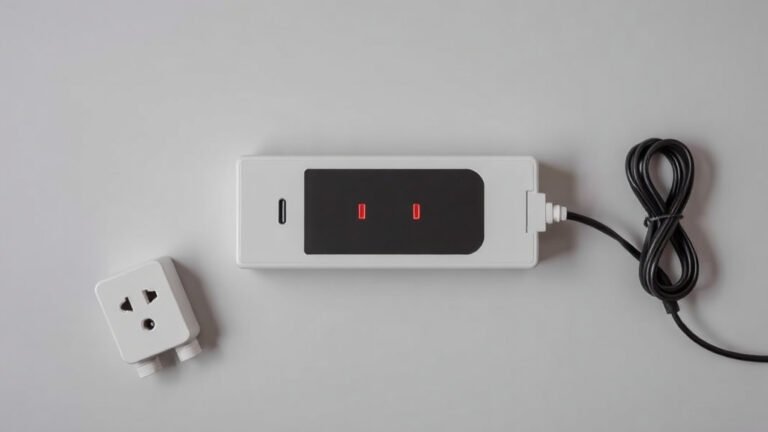
Portable units plug directly into the pedestal. Then you plug your RV cord into them. They’re easy to move between vehicles and simple to install. Someone could steal them, though, unless you buy a locking ring.
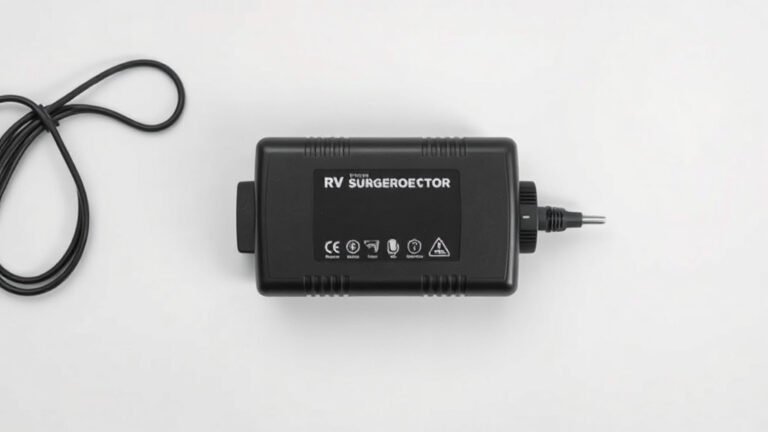
Hardwired units mount permanently inside your RV, usually near the electrical panel. They protect the whole rig, and nobody can walk off with them. Installation takes a little electrical know-how, but many owners do it themselves.
| Feature | Portable | Hardwired |
|---|---|---|
| Installation difficulty | Plug and play | Requires wiring |
| Portability | Move between RVs | Stays in one rig |
| Security | Needs a lock | Built-in |
| Visibility | You can see the display | Check the panel |
| Price | Slightly higher for features | Slightly lower |
Both types do the same job. The choice is about how you camp and what you value more.
Choosing the Right Protection for Your RV Setup
Before you buy anything, check what kind of electrical system your RV uses. The amperage rating matters more than any other spec.
Most RVs run on either 30-amp or 50-amp service. A 30-amp coach has one 120-volt power leg. A 50-amp coach has two 120-volt legs, which gives you more power for larger appliances.
You need a protector that matches your coach’s plug type. If you have a 50-amp coach, you need a 50-amp protector. Don’t try to jury-rig a smaller unit into a bigger system.
Key Features to Look For
Not all protectors are created equal. We found that the right features make a huge difference in how useful these devices are. Here’s what you should look for:
- Voltage display — shows you exactly what’s coming in before you energize your rig.
- Error codes — tells you why the unit shut off, so you can fix the problem.
- Audible alarm — alerts you when something’s wrong, even if you’re not looking.
- Reverse polarity protection — keeps you safe from miswired pedestals.
- Overload protection — handles amperage spikes that could trip breakers.
- Weatherproof housing — survives rain, mud, and sun when it’s plugged in.
Some higher-end units even connect to your phone. You can check your power status from inside your rig. Nice touch, and it means you don’t have to walk out in the rain to check the display.
The Real Cost of Skipping This Protection
Let’s talk dollars and cents. We’ve seen the bills, and they’re not pretty.
Your RV’s converter can cost $300 to $800 to replace. That’s the box that charges your house batteries and runs your 12-volt system. A power surge can kill it instantly.
Your air conditioner compressor runs $1,200 to $1,800 to fix. Low voltage wrecks these over time, often with no warning until the unit stops blowing cold air.
Your refrigerator, television, and microwave each cost hundreds to replace. A full electrical failure can rack up $5,000 or more in damage. And here’s the kicker: most RV insurance policies won’t cover electrical surge damage. They call it a maintenance issue, not a covered loss.
All that risk goes away for the price of a good protector. Most quality units cost less than a single repair call, and a single save pays for the device many times over.
What About Generator Power?
Do you boondock with a generator? Your protection needs don’t disappear just because you’re off-grid.
Generators can produce unstable power, especially cheaper models. Frequency can drift, and voltage can fluctuate with the load. An EMS helps clean up that power before it reaches your electronics.
We recommend a protector that works for both generator and shore power. That way, you get protection no matter where the electricity comes from.
Plug In With Confidence
Here’s the checklist we want you to walk away with. Before your next trip, make sure you’ve got these bases covered:
- Match your amperage — buy a 30-amp or 50-amp protector that fits your plug.
- Get an EMS, not just a surge protector — the extra protection pays for itself.
- Check the display before you energize — confirm the power is safe first.
- Lock your portable unit — prevent theft with a locking ring.
- Test your unit regularly — make sure the surge suppression still works.
- Keep it accessible — you want to see that voltage display at a glance.
We always tell fellow campers the same thing: protect the expensive stuff. An RV surge protector is one of those small investments that gives you serious peace of mind. No more guessing if the pedestal is safe. No more hoping your luck holds out.
Plug in, check the readout, and enjoy your trip. That’s how camping is supposed to work.
Conclusion
You need an RV surge protector, plain and simple. We’ve walked through the fried converters, dead AC compressors, and blown-out electronics that happen when campground power goes bad. The math is easy: a $100 to $600 protector beats a $5,000 repair bill every single time.
We recommend going with an EMS unit if your budget allows. The extra protection against miswired pedestals, open neutrals, and low voltage is worth every penny. You don’t have to be an electrician to get this right. Match your amperage, pick a portable or hardwired model, and check that display before you flip the breaker.
Your next step is simple: measure your plug, order a protector that matches, and never plug into another pedestal without it. That small purchase buys you real peace of mind on every single trip.
Frequently Asked Questions
Can I use a regular household surge protector in my RV?
No, you shouldn’t. A household power strip won’t handle the amperage or the wiring conditions of an RV pedestal. It also won’t detect problems like open neutrals or reverse polarity. You need a unit built specifically for RV electrical systems.
How long does an RV surge protector last?
Most quality units last five to ten years with normal use. The MOVs inside degrade slightly every time they absorb a surge. Many models have a small indicator light or error code that tells you when the protection is worn out. If your unit shows a fault, replace it right away.
Will a surge protector stop my RV breakers from tripping?
No, a surge protector won’t stop your breakers from tripping. It protects against voltage spikes and wiring faults, not overloading your own system. If you’re tripping breakers, you’re using too much power at once. You’d need to manage your appliance usage or upgrade your RV’s electrical capacity.
Do I need a surge protector if I only camp in new RV parks?
Yes, even brand-new parks can have electrical problems. Construction crews can miswire pedestals, and lightning can hit nearby transformers regardless of how new the equipment is. We’ve seen issues at fancy resorts and old state parks alike. Protection matters everywhere you plug in.
Can I leave my portable surge protector plugged in during rain?
You can, as long as you bought a weatherproof model. Most portable units designed for RV use have sealed housings that handle rain and moisture. That said, you should always make sure the connection is snug and the unit is mounted with the cord looped to keep water from running into the plug.