Resetting Your RV Surge Protector: Step-by-Step Guide
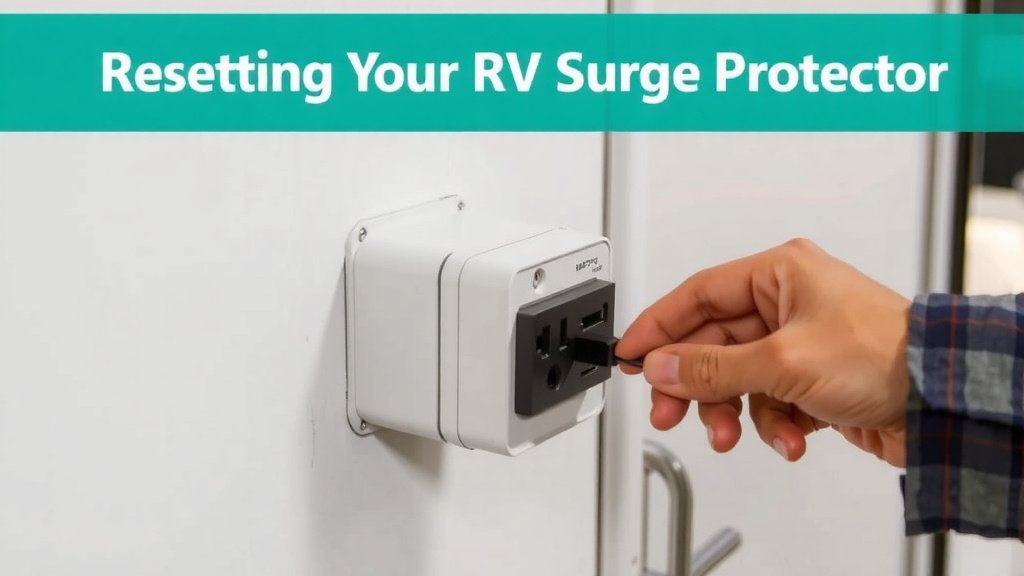
The easiest way to reset your RV surge protector is to unplug it from shore power, wait 60 seconds, and plug it back in. This simple power cycle clears most error codes and faults. You should also press the reset button on the unit if it has one, as many models require this step.
Your RV surge protector is your first line of defense against bad campground power. When it trips, it is doing its job by shutting off power to protect your rig. We found that most reset issues come down to a few common problems, like low voltage from the pedestal or a simple glitch in the unit itself. Knowing how to reset it properly saves you a service call and gets your AC running again fast.
- First step: Unplug from shore power and shut off the breaker at the pedestal.
- Second step: Wait at least 60 seconds to let the capacitors drain completely.
- Third step: Press the manual reset button if your model has one.
- Fourth step: Plug back in and check the display for error codes.
- Still not working? You likely have a low voltage or wiring issue at the pedestal.
Below, we walk you through the exact reset process step by step, including how to clear specific error codes on popular brands like Progressive and Hughes. Let’s get your power back on safely.
Resetting Your RV Surge Protector Step by Step
You can get your power back on in just a few minutes. The process is simple, but you need to follow the steps in order. Skipping steps can leave you scratching your head with a dead rig.
Safety First Before You Touch Anything
Start by turning off the breaker at the campground pedestal. This cuts the power flow completely. You do not want live electricity running through the cord while you work.
Put on a pair of rubber-soled shoes. Dry hands are a must, too. We found that most folks rush this part, but a quick safety check prevents nasty surprises.
If your surge protector is hardwired into your RV, flip the main breaker inside your rig instead. That isolates the unit from your electrical system. Either way, you are cutting the juice to reset the brain of the protector.
The Standard Power Cycle Reset
Unplug the surge protector from the pedestal completely. Do not just flip the breaker. You need to physically disconnect the unit to drain the internal capacitors.
Wait a full 60 seconds. This is not a suggestion. The capacitors inside store electricity, and they need time to discharge. We found that a quick 5-second wait often is not enough to clear the error state.
Plug the surge protector back into the pedestal. Turn the breaker back on. Watch the display screen. Most units will run a self-test and show a green light when all is well.
What the Display Should Show After Reset
A normal reading shows the voltage for each leg, usually around 110 to 125 volts. The display should show “OK” or a green light indicator. If you see an error code again right away, the problem is not a glitch. It is a real power issue at the pedestal.
Using the Manual Reset Button on Your Unit
Many modern surge protectors have a small reset button. This is separate from the main breaker. It looks like a tiny red or black button near the display or on the side of the unit.
Press and hold the reset button for 3 to 5 seconds. You should hear a click. That click means the internal relay has reset. Release the button and check the display for changes.
Some models require you to press reset while the unit is plugged in. Check your owner’s manual for the exact sequence. We found that holding the button too long, or not long enough, is a common user error.
When to Press Reset vs. When to Just Power Cycle
Use the manual reset button when the display shows a fault code. Use the power cycle method when the unit seems frozen or unresponsive. The two methods work together, but they solve different problems.
- Power cycle: Fixes frozen screens and minor software glitches.
- Manual reset button: Clears specific error codes and fault states.
- Both together: Best for stubborn issues that do not clear with one method.
Clearing Error Codes on Popular Brands
Each brand has its own language for telling you what is wrong. We looked at the most common units on the road today. Here is what the codes mean and how to clear them.
Progressive Industries Surge Protector Reset
Progressive units show error codes like E1 through E8. The most common ones are E1 (reverse polarity) and E4 (open ground). These are wiring issues at the pedestal, not problems with your unit.
To reset a Progressive unit, unplug it and wait 2 minutes. Plug it back in. If the error returns, the pedestal has a real wiring problem. Try a different pedestal or ask the campground host for help.
Progressive recommends a 3-minute wait for their hardwired models. The extra time lets the internal microprocessor fully reboot. We found that following this longer wait clears most false alarms.
Hughes Autoformer Surge Protector Reset
Hughes units show a series of lights instead of numeric codes. A red light means a fault. A green light means power is good. If you see blinking red, you have a wiring issue at the pedestal.
Unplug the Hughes unit and press the test button on the side. Hold it for 5 seconds. Plug it back in. The lights should cycle through a self-test and land on green.
If the red light stays on, check the pedestal with a basic outlet tester. Many experts say that Hughes units are sensitive to open neutrals, which can be dangerous.
Camco and Southwire Portable Models
Camco units have a simple push-button reset. Southwire models use a twist-lock design with an integrated reset switch. Both are easy to handle without tools.
For Camco, unplug, press reset for 10 seconds, and plug back in. For Southwire, rotate the dial to the off position, wait 30 seconds, and rotate it back on. Check the LED indicators for a solid green glow.
Dealing With Low Voltage and Faulty Pedestals
Low voltage is the number one reason surge protectors trip. Many campgrounds have old wiring that sags under load. Your surge protector is designed to shut off power if voltage drops below safe levels.
Most surge protectors cut power at 104 volts or lower. They also shut off if voltage spikes above 132 volts. This protects your AC unit and refrigerator from damage.
How to Test Your Pedestal Voltage
Use a digital multimeter to check the pedestal. Set it to AC voltage. Stick the probes into the outlet slots and read the display. You want to see between 110 and 125 volts.
Check both hot legs if you have a 50-amp service. Each leg should read around the same voltage. A big difference between legs means a problem with the campground’s transformer.
If you do not have a multimeter, use the display on your surge protector. Many units show real-time voltage. This is the quickest way to see what is going on without extra tools.
What To Do If Voltage Is Low
Move to a different pedestal if one is available. Ask the campground office if they know about the problem. Sometimes they have a maintenance person who can fix it quickly.
You can also use a voltage booster like the Hughes Autoformer. This device raises low voltage to safe levels. It is not a surge protector, but it works alongside one to keep your rig safe.
Troubleshooting Persistent Surge Protector Faults
Sometimes the pedestal is fine, and the problem is your cord or connectors. Corroded prongs or a damaged cord can cause false faults. Inspect your equipment before blaming the campground.
Look for burn marks on the prongs. These are signs of arcing, which creates heat and can damage your unit. Check the cord for cuts, frays, or melted spots.
Checking Your RV Side Connections
Unplug the cord from your RV’s inlet. Inspect the inlet for loose wires or corrosion. Tighten any loose screws on the terminals. A loose neutral on the RV side can trigger a fault on the surge protector.
Many experts say that 20% of surge protector faults come from the RV side, not the pedestal. Do not overlook this step. It is an easy fix that costs nothing.
Temperature Overload and Shutoff
Surge protectors have thermal sensors. If the unit gets too hot, it shuts off power. This is a safety feature to prevent melting or fire.
Check if your unit is in direct sunlight. Move it into the shade if possible. Make sure the vents are not blocked by your storage compartment door.
Let the unit cool down for 30 minutes before trying to reset it. We found that most thermal shutdowns clear on their own once the unit cools off.
Portable vs. Hardwired Surge Protector Resets
Portable units plug into the pedestal, and you plug your cord into them. Hardwired units are installed inside your RV’s electrical bay. The reset process is slightly different for each type.
| Feature | Portable Unit | Hardwired Unit |
|---|---|---|
| Reset method | Unplug from pedestal | Flip main breaker off and on |
| Manual reset button | Yes, on the unit body | Yes, on the faceplate or panel |
| Wait time | 60 seconds | 2 to 3 minutes |
| Display access | Easy to see | May require opening a compartment |
Hardwired units are more convenient because you cannot lose them. But they are harder to access for resets. Plan for that extra reach when you need to clear a fault.
Common Mistakes to Avoid When Resetting
Many folks make the same errors when trying to reset their surge protector. Avoiding these mistakes saves you time and frustration. We rounded up the most common ones based on owner forums and manufacturer guidance.
- Not waiting long enough: Capacitors hold charge for a while. Give it a full minute or more.
- Resetting while plugged in: Some units require unplugging first. Check your manual.
- Ignoring the error code: If the code comes back, it is a real problem, not a glitch.
- Using an extension cord: This can cause voltage drop and false faults. Plug directly into the pedestal.
- Skipping the pedestal breaker: Turn it off before unplugging to prevent arcing on the prongs.
- Forgetting to inspect prongs: Burned or corroded prongs cause connection issues that mimic faults.
When to Call a Professional Electrician
You can handle most resets on your own. But some situations call for a licensed electrician. Do not risk your safety or your RV’s electrical system.
Call for help if you see sparks when plugging in. Call if you smell burning plastic or ozone. Call if the unit is hot to the touch even after unplugging.
If you have tried all the reset steps and the error persists, there may be internal damage. A professional can test the unit and tell you if it needs replacement.
Many experts say that surge protectors have a lifespan of 3 to 5 years. They absorb surges over time and lose effectiveness. If yours is old and acting up, replacement might be the best option.
Quick Checklist for a Successful Reset
Bookmark this checklist for your next trip. It covers all the essentials in one glance. Run through these steps and you will have power back in minutes.
- Turn off the pedestal breaker first.
- Unplug the surge protector completely.
- Wait 60 seconds (or 3 minutes for hardwired units).
- Press and hold the manual reset button if available.
- Plug back in and turn the breaker on.
- Verify the display shows a green light or normal voltage.
If the fault returns after this sequence, document the error code. Call the campground office or a local RV tech. They can help you diagnose pedestal issues or unit failures.
You now have the knowledge to handle most surge protector resets on your own. Keep this guide handy in your glove box or phone. A little preparation goes a long way when you are parked at a remote campsite with no AC on a hot day.
Conclusion
Resetting your RV surge protector is a simple skill that saves you time and money on the road. You now know the exact steps: cut power, wait for capacitors to drain, press the reset button, and check your display. Most faults come from low voltage or pedestal wiring, not your equipment.
We recommend saving this guide to your phone before your next trip. When you roll into a campground and your surge protector trips, you will know exactly what to do. Run through the quick checklist first, then dig into the brand-specific steps if needed. You have the tools to handle this yourself and get your AC humming again.
Frequently Asked Questions
How do I know if my RV surge protector is actually bad?
If your unit shows an error code immediately after a proper reset and the pedestal tests fine, the protector may be damaged. Look for burn marks, a melted casing, or a burnt smell. Most surge protectors last 3 to 5 years, so age matters too.
Can I reset my surge protector while my RV is still plugged in?
No, you should never reset a portable unit while it is connected to shore power. You need to physically unplug it to drain the internal capacitors. Hardwired units can be reset by flipping the main breaker, but you should still cut power first for safety.
Why does my surge protector keep tripping at the same campground?
That means the pedestal has a consistent wiring problem. Check the voltage with a multimeter or your unit’s display. If you see readings under 104 volts or over 132 volts, the campground needs to fix their equipment. Try a different site if one is available.
What does a blinking red light mean on my RV surge protector?
A blinking red light usually indicates a wiring fault like an open ground or reverse polarity. It can also mean low voltage. Unplug your unit, wait 60 seconds, and plug it back in to see if the light clears. If it stays red, the pedestal has a real problem.
Is it safe to use my RV without a surge protector?
We strongly advise against it. Campground power can be unstable, and a power surge can fry your appliances, AC unit, and electronics. A surge protector is a small investment compared to the cost of replacing your RV’s electrical system. Keep it plugged in at all times.