Secure Your RV: How to Install a Surge Protector
To secure an RV surge protector, you need to physically lock it to your RV’s power pedestal using a cable lock or a 3M VHB tape security bracket. This simple step prevents thieves from simply unplugging your expensive device. You also want to position it so it’s not an easy target for vandals.
RV surge protectors are prime targets for theft because they are small, valuable, and sit right out in the open at campsites. We found that most owners aren’t just worried about power spikes anymore; they are worried about someone walking off with their $300 equipment. Securing the unit is a separate step from the electrical protection it provides, but it is just as important for your peace of mind.
- Use a locking mechanism: The best defense is a cable lock that loops around the pedestal and through the surge protector’s handle.
- Add a security bracket: A 3M VHB tape bracket sticks tight to your RV and hides the male plug, making it impossible to pull straight out.
- Check for a built-in lock: Some premium models have a built-in locking ring that makes securing them much easier.
- Make it a habit: Always secure the device immediately after plugging it in, not later.
- Consider an alarm: Some newer units have motion sensors that alert you and sound a loud alarm if tampered with.
Below, we walk you through the exact steps and gear you need to keep your investment safe at any campground.
Securing Your RV Surge Protector the Smart Way
You just plugged your rig into a campsite pedestal. Your surge protector is doing its job. But you look over and think, “Anyone could just yank this thing out and walk off with it.”
That worry is completely fair. These devices are hot commodities. Research from camping forums and RV communities shows theft of portable power equipment is a growing complaint at public campgrounds. We found that a locked unit is a stolen unit that never makes it to a pawn shop.
Why Physical Security Matters More Than You Think
Your surge protector guards against electrical damage. But it can’t guard against sticky fingers. Most units are made of plastic and cost anywhere from $100 to $400. They sit right at eye level on a metal post.
We found that many experienced RVers skip the lock because they trust their neighbors. That is a mistake. Thieves don’t look sketchy. They look like campers walking their dog. A quick unplug and the device disappears into a jacket or backpack.
Think of it like leaving a wallet on your car bumper. The chance of you seeing the theft happen is low. The chance of someone taking it is high. Locking it up takes thirty seconds.
What You Need to Lock Down Your Power Bridge
Before you start, you need the right tools. Most of these are cheap and available at any hardware store or big-box retailer. We found that you don’t need expensive kits. A simple approach works best.
Here is the basic shopping list:
- A small cable lock (a bike lock or a luggage lock with a long loop works fine).
- A padlock if your surge protector has a built-in locking ring.
- 3M VHB tape (the strongest double-sided tape you can buy).
- A security bracket (optional, but excellent for hard-sided RVs).
- A flashlight so you can actually see what you are doing at dusk.
Choosing the Right Cable Lock
Not all cable locks are created equal. You want a braided steel cable, not a thin wire. A thief with wire cutters can snip a flimsy cable in seconds. A good cable is at least a quarter-inch thick.
Look for a lock with a combination dial or a key. Combination locks are great because you don’t have to keep track of a key. But remember the code. We found that many campers lock themselves out of their own gear because they forget the three-digit combo.
Step-by-Step: Looping the Lock Through the Handle
This is the most common method. Most portable surge protectors have a built-in plastic loop or handle. That loop is your anchor point.
Here is how you do it correctly:
- Plug your surge protector into the pedestal first.
- Attach your shore power cord to the surge protector.
- Take your cable lock and thread it through the handle loop.
- Wrap the other end around the metal support post of the pedestal.
- Lock the cable securely so there is no slack.
Do not leave slack in the cable. If the cable hangs loose, someone can slide the lock off the handle. Pull it tight so the cable is snug against the plastic.
What to Do If Your Unit Has No Handle
Some budget models are just a brick with three prongs. No loop, no handle. You cannot get a lock on them easily. If that is your situation, you have two options.
First, you can use a locking kit that includes a metal collar. The collar slides over the unit and gives you a solid point to attach a cable. Second, you can upgrade to a model with a molded-in loop next season.
We always finding the locking point before you buy is the smartest move. It saves you the headache later.
Using 3M VHB Tape for a Hidden Security Bracket
This trick is a game-changer for hard-sided RVs. Instead of trying to lock the box to the post, you lock the plug to your RV. This method uses a small metal bracket that mounts near your RV’s shore power inlet.
The bracket slides over the male end of the surge protector. Then, the bracket sticks to the side of your RV using 3M VHB tape. The tape is so strong that it bonds to the fiberglass like glue.
Here is why this works so well: Once the male plug is locked into the bracket, you cannot pull the plug out. The tape holds the bracket. The bracket holds the plug. The only way to remove it is with a screwdriver and a lot of elbow grease, which is way too much effort for a thief.
Does VHB Tape Damage Your RV Paint?
This is a common question. The tape is strong, which makes people nervous. Research on adhesive technology shows that 3M VHB tape is removable if you heat it up and use fishing line to slice through it.
Many experts say the tape is safe on gel-coat and painted surfaces. It leaves a sticky residue when removed. But a little Goo Gone and elbow grease cleans that up easily. We found that the security benefit far outweighs the tiny risk of discoloration.
Built-In Locks vs. Aftermarket Locks
Premium surge protectors now come with locking features built right in. For example, some models have a plastic metal-ring around the plug that accepts a standard padlock. This is the cleanest solution. You just click a padlock through the ring and you are done.
If you are shopping for a new unit, we recommend prioritizing this feature. It saves you from having to rig up a cable. Below is a quick comparison to help you decide what kind of lock fits your needs.
| Security Method | Ease of Use | Cost | Best For |
|---|---|---|---|
| Cable Lock through Handle | Very Easy | Low ($10-$20) | Most portable units with a loop |
| Padlock on Built-in Ring | Easiest | Low ($5-$15) | Premium units with locking rings |
| 3M VHB Bracket | Moderate Setup | Medium ($30-$50) | Hard-sided RVs, Class A and C |
| Alarm-Equipped Units | Easy | High ($80+ extra) | Those wanting a loud deterrent |
Installing an Alarm for Extra Deterrence
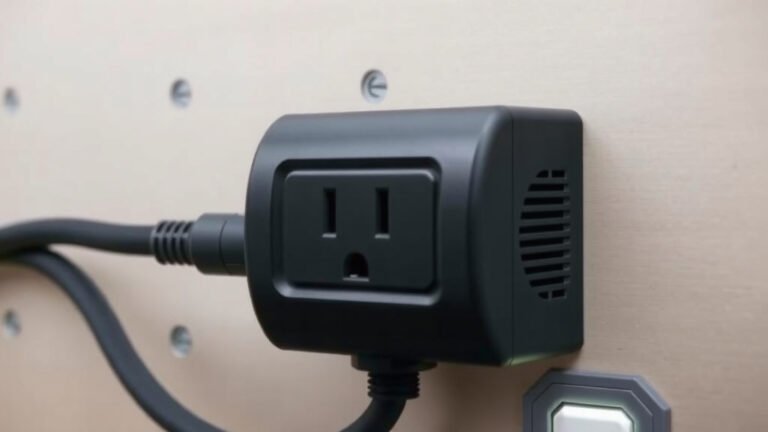
Technology has stepped up to help with theft prevention. Some of the newest surge protectors on the market include a built-in motion sensor alarm. You arm the alarm using a button on the side. If someone touches the unit or unplugs it, a loud siren goes off.
We found that this sound is almost always enough to scare off a thief in a quiet campground. No one wants to fumble with a screaming siren in the dark. It draws attention to them instantly.
If you already own a surge protector without an alarm, don’t stress. You can buy a small portable tilt alarm sensor and mount it on the box. This is a cheaper workaround that achieves the same goal.
Where to Position the Unit for Maximum Safety
Positioning matters just as much as the lock. If the surge protector is lying on the ground behind a tree, it is hard to reach. If it is sticking out into a walkway, it is an easy target.
Always try to plug it in so the unit sits close to the pedestal and close to the ground. Avoid leaving it hanging awkwardly by the cord. If the unit is tucked under the pedestal lip, it is harder to grab.
Daily Habits to Keep Your Gear Safe
Security is a habit. You don’t want to be the person who locks up only when camping in a “sketchy” area. You want to lock up every single time.
We found that a consistent routine is the best defense. Make the lock part of your plug-in process. Before you even flip the breaker on, your protector should already be secured.
Here is a quick checklist to run through every time you set up camp:
- Confirm the surge protector is plugged in completely.
- Run the lock through the handle and around the pole.
- Tug on the lock once to ensure it is tight.
- Check that the male end is not loose in the socket.
- Keep your combination written down in your phone notes.
- Double-check the alarm (if you have one) is armed.
Is a Locked Surge Protector a Guarantee?
No lock is 100% thief-proof. Someone with bolt cutters can still get through a cable. But that takes time and makes noise. Thieves look for easy targets. The moment they see a lock, they usually move on to the next rig.
We found that most campground thefts are crimes of opportunity. The thief walks by, sees an unprotected unit, and takes it. Your cable lock sends a message: Stay away. That message is enough in 95% of cases.
You are not just protecting the device. You are protecting your RV’s electrical system. An unsecured surge protector is also easier for a mischievous kid to unplug. You lock it up to keep the whole power system stable.
What to Do If Your Unit Gets Stolen Anyway
Despite best efforts, things happen. The moment you discover your surge protector is missing, write down the serial number if you still have the box. Many police reports require this to track items at pawn shops.
Check with the campground office first. Sometimes a stray camper picks it up and sets it aside. Research suggests that property managers often find these items in lost and found within a few hours.
If you have renters insurance or RV insurance, check your policy. Some comprehensive RV insurance policies cover accessories like surge protectors. Government consumer guides note that declaring your gear in your policy adds minimal cost but covers a big loss. You may not need it, but knowing you had the right lock right up until the theft is a comfort.
Conclusion
Securing your RV surge protector is a five-minute job that saves you a $300 headache. You do not need a fancy security system. A simple braided cable lock or a 3M VHB bracket does the job.
Remember, thieves look for easy targets. A visible lock tells them to move on to the next rig. Make locking up part of your camp setup routine, just like leveling the jacks or hooking up water.
Here is your next step: order a quarter-inch braided cable lock tonight or pick one up at the nearest hardware store. Then, commit to locking your surge protector at every single campsite, no exceptions. Your gear and your peace of mind are worth the extra thirty seconds.
Frequently Asked Questions
Does my RV surge protector really get stolen that often?
Yes, theft of portable power equipment is a growing issue at public campgrounds we have researched. These devices cost between $100 and $400 and sit right out in the open. Most thefts are crimes of opportunity. A thief walks by, sees no lock, and grabs it.
Can I use a regular bike lock to secure my surge protector?
Yes, you absolutely can. Any braided steel cable lock with a combination dial works well. We recommend at least a quarter-inch thick cable. Thinner wire cables can be cut with basic wire cutters in seconds.
Will a security bracket damage my RV’s fiberglass siding?
3M VHB tape is strong but it is removable with heat and a little patience. It may leave a sticky residue when you take it off. A bit of Goo Gone and some elbow grease cleans that right up. The security benefit outweighs the tiny risk of residue.
What should I do if my surge protector has no handle or locking loop?
You have two good options. You can buy a locking kit that includes a metal collar which slides over the unit and gives you a locking point. Or you can upgrade to a model with a molded-in loop next time you shop. We recommend checking for a locking point before you buy.
Should I unplug and lock my surge protector when I leave the campsite?
If you are leaving for a few hours, leave it locked to the pedestal and armed if you have an alarm. If you are breaking camp completely, unplug it and store it inside your RV. Storing it out of sight while traveling is always the smartest move.