Choosing the Best Surge Protector for Your RV
The best surge protector for your RV is a smart surge protector with low-voltage protection, like the Progressive Industries EMS-PT30X or the Hughes Autoformer PWD30-EPO. We found these models do more than just stop power spikes—they catch wiring errors and shut off power before they can fry your camper’s electronics. You need one with both surge suppression and electrical protection to keep your rig safe.
RV parks often have unreliable power. Dirty power, brownouts, and bad wiring are common problems we see. A plain surge protector only handles sudden spikes, but a good EMS unit monitors everything and checks for faults before you even plug in. This extra layer of safety is what makes the difference between a minor annoyance and a $10,000 repair bill.
- Best overall: Progressive Industries EMS-PT30X (hardwired or portable)
- Best budget pick: Camco PowerGrip with surge protection (basic, no display)
- Look for low-voltage cutoff to prevent compressor damage to your AC
- Get 50-amp if you have a large rig or plan to upgrade later
- Remote monitoring via Bluetooth is worth the extra cash
Below, we break down exactly how these protectors work and which one fits your camping style. Let’s walk through the specs so you can pick the right one with confidence.
Choosing the Right Power Protection for Your RV
You need to know what your RV can handle before you buy. Most travel trailers and small campers run on a 30-amp plug. Bigger rigs, motorhomes, and fifth wheels with two air conditioners need 50-amp service. You can’t plug a 50-amp RV into a 30-amp pedestal without a special adapter, and using a 30-amp protector on a 50-amp rig is a recipe for disaster. Plan for your RV’s amperage with our breakdown of 30 amp versus 50 amp protectors.
We found that checking your RV’s power cord is the fastest way to know your amp rating. If the plug has three prongs and looks like a typical house plug, you’re on 30-amp. If it has four flat prongs and is about twice the size, you’re on 50-amp. Getting this right matters because the protector must match your RV’s amperage to work correctly.
Why Portables Beat Hardwired Units for Most Campers
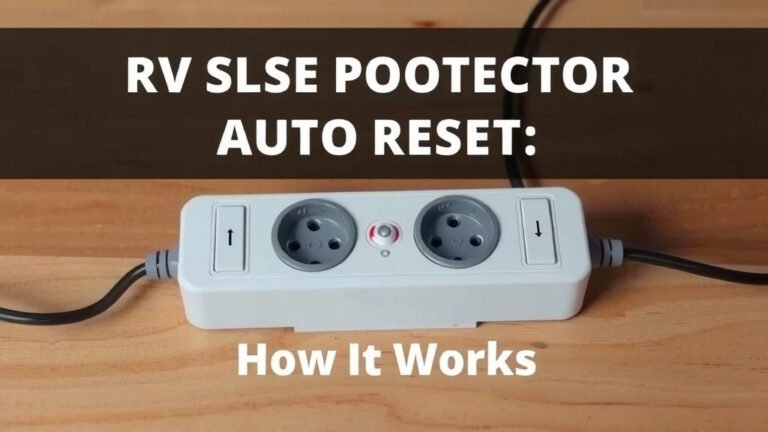
Portable surge protectors plug directly into the pedestal at your campsite. You connect your RV’s cord to the protector. This setup takes about 30 seconds. The main benefit is that you can use it on any RV, and you can store it safely when you’re not camping.
Hardwired units mount inside your RV’s electrical bay. They’re always on, and they protect you automatically. No need to remember to plug anything in. Many experts say hardwired units are safer because they can’t be stolen, but they cost more in labor if you’re not handy with electrical work.
We found that most campground visitors prefer portables because they work at rental RVs and future campers you might buy. Plus, if a pedestal has bad wiring, you see the error on the display before you connect your rig.
What an EMS Does That Standard Surge Protectors Don’t
The difference between a basic surge protector and an EMS is night and day. A plain surge protector catches high-voltage spikes, like a lightning strike nearby. That’s it. An EMS catches everything else, including the problems that damage RVs most often.
Think of it like wearing a helmet versus wearing full safety gear. A standard surge protector covers the top of your head, but an EMS covers your entire body. The cost difference is worth the extra coverage, especially when you consider the price of replacing a refrigerator or a television.
Low-Voltage Protection Saves Your Air Conditioner
RV parks deal with high demand in summer. When everyone runs their AC, voltage can drop. This is called a brownout. Your AC compressor works harder at low voltage, which causes it to overheat and fail. We found that low-voltage cutoffs are the most important feature you can buy.
An EMS monitors incoming power constantly. If voltage drops below 104 volts or spikes above 132 volts, it shuts off power to your RV. This happens in milliseconds. Your AC might cycle off for a few minutes, but it won’t burn up. That’s a fair trade for a longer equipment life.
How Wiring Fault Detection Works
Some older RV parks have miswired pedestals. Maybe the neutral and hot wires are reversed, or the ground isn’t connected properly. Plugging into a miswired pedestal can send power where it shouldn’t go, and that can damage your electronics.
An EMS runs a diagnostic check when you first plug in. It looks for open grounds, reversed polarity, and other wiring problems. If it finds a fault, it won’t pass power through. Instead, it displays an error code so you know to find another pedestal or ask the park to fix the wiring.
Key Features That Justify the Price Difference
Prices range from roughly $50 for a basic suppressor to over $300 for a top-tier EMS. The gap comes down to features. We recommend vetted features that genuinely protect your equipment and make your life easier.
Here is a quick breakdown of what you get at each price point, based on our research of popular models and owner feedback:
| Feature | Budget Protector ($50-$99) | Mid-Range EMS ($150-$250) | Premium EMS ($250+) |
|---|---|---|---|
| Surge suppression (joules) | 1,000-2,000 | 2,000-3,500 | 3,500+ |
| Low-voltage cutoff | No | Yes | Yes |
| Wiring fault detection | No | Yes | Yes |
| Digital display | LED only | Voltage readout | Full readout + errors |
| Remote monitoring (Bluetooth/Wi-Fi) | No | Optional | Built-in |
| Weatherproof cover | Sometimes | Yes | Yes |
Look for a unit with at least 2,000 joules of surge protection. This number tells you how much energy the unit can absorb before it wears out. Lower joule ratings can still work, but they degrade faster after each surge event.
How Many Joules Do You Actually Need
Joules measure energy absorption. The higher the number, the more protection you get. For an RV, you want a minimum of 2,000 joules. If you’re in an area with frequent thunderstorms, aim for 3,500 or more. That extra capacity means the unit lasts longer before needing replacement.
We found that manufacturers rate surge protectors for a single major surge or multiple small ones. Once the metal oxide varistors (MOVs) inside absorb their rated energy, they stop working. That’s why you see indicator lights on some models. A green light means protected, and a red light means the unit needs replacing.
Many experts say to check your protector’s status lights at the start of each trip. It takes five seconds, and it saves you from camping with no protection at all.
Bluetooth Monitoring and App Connectivity
Premium surge protectors now come with Bluetooth and Wi-Fi connectivity. That means you can check your voltage, amperage, and error codes from your phone. It’s a “set it and forget it” approach to power monitoring.
If you’re sitting at the campfire and your AC stops running, you can pull up the app to see why. It might show that voltage dipped for a few seconds. You get peace of mind without walking back to the pedestal to look at a display.
This feature is worth the extra money if you camp frequently or boondock in unfamiliar places. It’s less critical for occasional weekend trips to the same local park you’ve visited for years.

Progressive Industries vs. Hughes Autoformer
When you search for RV surge protectors, two brands dominate the conversation. Progressive Industries and Hughes Autoformer both make excellent EMS units. We found that they use slightly different approaches to solve the same problem.
Progressive Industries focuses on robust construction and clear digital displays. Their portable units feature a built-in mounting bracket that you can attach to the pedestal post. This keeps the unit off the ground and away from puddles.
Hughes Autoformer focuses on power boosting in addition to protection. Some models include a voltage booster that raises low pedestal voltage by 10-15 volts. This is helpful in parks with notoriously weak power, and it keeps your AC running even when neighbors are pulling heavy loads.
Understanding the Warranty and Support Difference
Both brands offer warranties that cover your RV’s electronics if their unit fails to protect them. Progressive backs their products with a lifetime warranty on the unit itself. Hughes offers a similar guarantee and adds a “connected equipment” warranty that covers up to a certain dollar amount in repairs.
We recommend reading the fine print on these warranties before buying. Some require you to ship the defective unit back at your expense. Others have a direct claim process that’s faster if you have a problem while on the road.
Matching the Protector to Your Camping Style
Think about where and how you camp before spending money. A snowbird spending six months in Arizona needs different protection than a family doing weekend trips to a state park. Your usage pattern should guide your purchase.
If you stay in the same park all season with known-good power, a budget protector might be fine. If you travel weekly and use various parks, an EMS with Bluetooth gives you peace of mind at every stop. If you dry camp or stay in older parks, look for a voltage booster to handle weaker pedestals.
Portable Units and Theft Deterrents
Portable surge protectors are at risk for theft. They sit right at the pedestal, visible to other campers. Several manufacturers sell locking brackets that secure the unit to the pedestal with a small padlock. It’s a cheap add-on that prevents headaches.
There is no universal standard for these locks, so check that your protector has a locking ring that accommodates a padlock. Some units come with this built in, which is a nice touch. It’s one less item to buy and carry.
Quick Checklist Before You Buy
We put together a fast checklist to help you narrow down your options. Run through these points before you add anything to your cart. This list works as a final sanity check.
- Verify your amp rating — check your RV’s power cord plug shape and size.
- Confirm it has low-voltage cutoff — non-negotiable for AC compressor safety.
- Check joule rating — aim for at least 2,000 joules for real protection.
- Look for wiring fault detection — catches miswired pedestals before you connect.
- Decide on Bluetooth — worth it if you travel often or want remote monitoring.
- Factor in a locking bracket — protects your investment from theft.
Once you have your checklist ready, you can compare models with confidence. The right surge protector for your RV is the one that covers your specific risks without overspending on features you’ll never use.
Conclusion
Choosing the best surge protector for your RV comes down to matching the right features to how you camp. We found that a smart EMS unit with low-voltage cutoff is the safest bet for most RVers. It protects your air conditioner, catches bad pedestal wiring, and pays for itself the first time it shuts off power to save your fridge.
You don’t need to spend top dollar if you camp in familiar parks with reliable power. But you should never skip surge protection entirely. Start with our quick checklist, verify your amp rating, and pick a unit that covers your biggest electrical risks.
Your next step is simple: check your RV’s power cord plug today, then order a protector that matches. You can camp with confidence knowing your electronics are safe no matter what the pedestal throws at you.
Frequently Asked Questions
Can I use a regular house surge protector in my RV?
No, you should not use a regular house surge protector in your RV. RV power systems handle different amperage and wiring configurations than a typical home outlet. A house surge protector won’t detect RV-specific issues like reverse polarity or open grounds. You need a unit designed for RV pedestals to get proper protection.
How long does an RV surge protector last?
Most RV surge protectors last between 3 to 5 years with regular use. The internal components degrade each time they absorb a power surge. Check the status lights on your unit before every trip. When the indicator shows the protection is gone, replace it right away.
Do I need a surge protector if my RV is brand new?
Yes, a new RV needs surge protection just as much as an older one. The electronics in new RVs are more sensitive than older models. A single power spike can ruin your television, microwave, or converter. Protect your investment from day one, not after something breaks.
What does the error code “E1” mean on my RV surge protector?
An “E1” error code typically means the pedestal has an open ground. This is a wiring problem where the ground wire isn’t connected properly at the campsite. Your surge protector detected the fault and shut off power to keep you safe. Try a different pedestal or ask the campground to fix the wiring before you plug in again.
Should I unplug my RV surge protector during a lightning storm?
Yes, unplug your RV surge protector during a severe lightning storm if you can do so safely. Surge protectors handle small spikes and surges, but a direct lightning strike can overwhelm any unit. Your protector will take the hit, but it might be destroyed in the process. Unplugging adds an extra layer of safety for your RV’s electrical system.