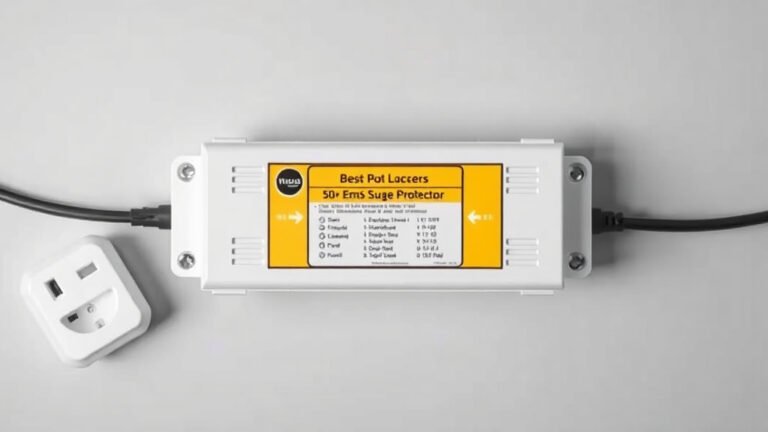
Why Your RV Needs a Surge Protector Now
You need an RV surge protector because your RV’s expensive electronics can be fried in an instant by a power spike. We found that a single surge can destroy your fridge, TV, or converter, and campground power is rarely clean or stable. Simply put, it’s a cheap insurance policy that protects your rig from unexpected voltage spikes.
Think of it like a power strip for your whole RV, but much smarter. These devices monitor the incoming power from the campground pedestal and cut the flow if something goes wrong. Many experts say that plugging in without one is a risky gamble, especially with modern RVs full of sensitive circuit boards. It’s not just about lightning; it’s about everyday fluctuations that can cause serious damage over time.
- It protects your wallet: Replacing a fried refrigerator or AC unit costs thousands, while a protector costs under $200.
- It guards against brownouts: Low voltage can burn out motors just as fast as a big spike.
- It catches wiring errors: Many models alert you to bad pedestal wiring before you even plug in.
- It is easy to use: You simply plug it in before your shore power cord, and it does the work.
- It’s a must-have for full-timers: If you live in your RV, this is non-negotiable protection.
Below, we break down exactly how these devices work and what you should look for when buying one. Let’s walk through the simple steps to make sure your next trip doesn’t end in a costly repair.
Protecting Your Rig from Power Problems
You plug your RV into a campground pedestal and expect clean power. But the reality is far messier. We found that campground wiring is often old, overloaded, or poorly maintained. A surge protector acts as your personal gatekeeper between that unpredictable power source and your home-on-wheels.
Think of it like a bouncer at a club. The bouncer checks the crowd before letting anyone in. Your surge protector checks the electricity before letting it reach your appliances. If something looks wrong, it shuts the whole thing down. No exceptions.
What Exactly Is a Surge Protector?
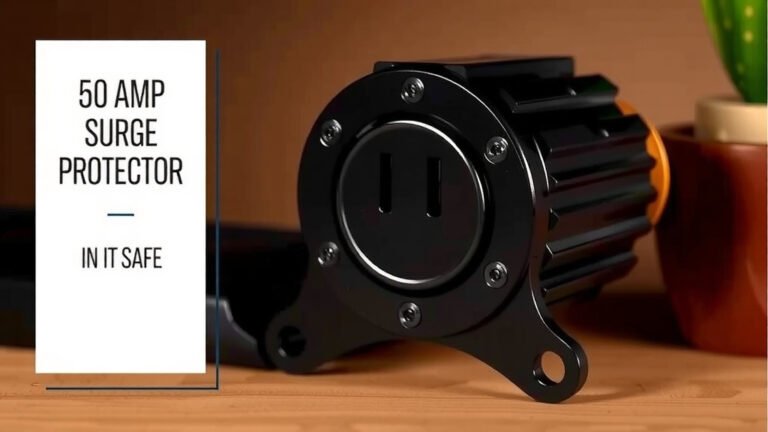
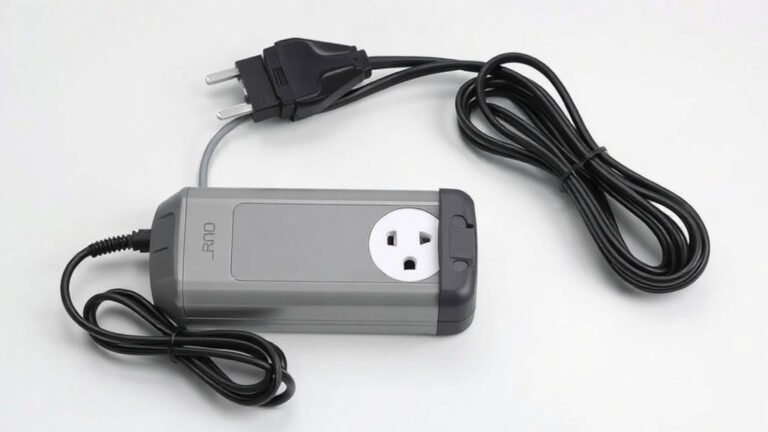
A surge protector is a device that sits between your shore power cord and the campground outlet. It monitors the voltage coming through. When it detects a spike or an unsafe condition, it cuts the power instantly.
Many people confuse surge protectors with power strips. They are not the same. A power strip just gives you more outlets. A surge protector actively guards your equipment. It absorbs or redirects excess voltage away from your RV.
The Real Cost of a Power Spike
We found that a single surge can destroy your refrigerator, TV, or converter in a split second. The National Electrical Manufacturers Association reports that surges cause billions in damage every year. Your RV is not exempt from this risk.
Replacing a modern RV refrigerator can cost anywhere from $1,500 to $3,000. A new AC unit runs similar numbers. Your converter, which charges your batteries, might set you back another $500. Compare that to a surge protector that costs under $200. The math is simple.
Surge Protection vs. Power Management
There is a difference between a basic surge protector and a full power management system. Understanding this helps you choose the right device for your needs. Both offer protection, but one goes much further.
Basic Surge Protectors
A basic surge protector handles voltage spikes. That is its only job. It uses a component called a metal oxide varistor, or MOV, to absorb excess voltage. When a spike hits, the MOV diverts that extra energy to the ground.
These devices are affordable and easy to use. You plug them in and forget about them. They protect against the most common electrical threats, like lightning strikes or sudden power restoration after an outage.
Electrical Management Systems
An electrical management system does everything a surge protector does, plus more. It monitors the incoming power continuously. It checks for low voltage, high voltage, open grounds, reversed polarity, and other wiring issues.
We found that these systems are especially helpful for RVers who camp in older parks. They display the current voltage on a screen. You can see exactly what your RV is receiving before you connect. Many experts say this visibility alone is worth the upgrade.
Which One Do You Actually Need?
If you camp occasionally in well-maintained parks, a basic surge protector is probably enough. It covers the most common risk, which is a sudden spike. It is a solid first line of defense.
If you full-time or boondock in varied locations, consider the management system. It catches problems that a basic protector misses. Low voltage, for example, can burn out your AC compressor just as fast as a spike. The extra cost buys you peace of mind.
How Low Voltage Damages Your RV
Most RVers worry about high voltage spikes. But low voltage, called a brownout, is actually a bigger threat. We found that brownouts cause more damage to RV appliances than surges do.
When voltage drops, your appliances work harder to maintain their performance. Motors draw more current to compensate. This extra current creates heat. Over time, that heat destroys the motor windings. Your AC unit, refrigerator, and water pump are all at risk.
Many guidelines point to low voltage as a leading cause of premature appliance failure (National Electrical Manufacturers Association). A power management system shuts everything down when voltage drops too low. It protects your motors from cooking themselves.
Signs of Low Voltage at a Campground
You might notice your lights dimming when the AC kicks on. Your microwave might run slower than usual. Your fridge might not get cold enough. These are all signs that the pedestal is not delivering proper voltage.
If you see any of these signs, unplug immediately. Do not wait for the problem to fix itself. Campground power rarely improves on its own. It usually gets worse as more campers plug in.
Wiring Errors and Pedestal Problems
Campground electrical pedestals are not always wired correctly. We found that open grounds, reversed polarity, and missing neutral wires are common issues. These problems can shock you or damage your equipment.
A surge protector with fault detection checks the pedestal before you connect. It verifies that the wiring is correct. If something is wrong, it displays an error code and refuses to send power to your RV. This simple check can save you from a dangerous situation.
How to Read the Error Codes
Most protectors use a series of lights to show the status. A green light means everything is fine. A red light or an error code means there is a problem. Always check the manual that comes with your device.
Common error codes include E1 for open ground, E2 for reversed polarity, and E3 for an open neutral. If you see any of these, find another pedestal. Do not try to work around the problem. It is not worth the risk.
Portable vs. Hardwired Surge Protectors
You have two main options when it comes to installation. You can buy a portable unit that plugs in between your cord and the pedestal. Or you can have a hardwired unit installed inside your RV. Each has its pros and cons.
Portable Units
Portable surge protectors are the most popular choice. They are easy to use and require no installation. You simply plug them in and connect your shore power cord to them. They work with any RV.
We found that portable units are also easier to replace. If a big surge destroys the protector, you just buy a new one. The protector takes the hit so your RV does not. That is exactly what you want.
Hardwired Units
Hardwired surge protectors are installed inside your RV, usually near the electrical panel. They are always on, so you never forget to plug one in. They also protect against surges that come from your own generator or inverter.
The downside is that hardwired units are more expensive to install. You might need a professional electrician. They also have a fixed capacity. If you upgrade your RV later, you might need a new unit.
What to Look For When Buying
Not all surge protectors are created equal. We found that the cheapest options often lack basic safety features. Look for a unit that offers solid protection without breaking the bank. Here is what matters most.
| Feature | Why It Matters |
|---|---|
| Joule Rating | Higher means more surge absorption. Look for at least 1,500 joules. |
| Response Time | Faster is better. Under 1 nanosecond is ideal. |
| Fault Detection | Checks pedestal wiring before power flows. |
| Weatherproof Housing | Protects the unit from rain and dirt. |
| Display Screen | Shows voltage and error codes clearly. |
| Warranty | Covers your RV if the protector fails. |
Understanding Joule Ratings
The joule rating tells you how much energy the protector can absorb before it fails. A higher rating means longer protection. We found that 1,500 joules is a good starting point for most RVs. If you have a large rig with many electronics, aim for 2,000 or more.
Remember that surge protectors wear out over time. Each surge they absorb reduces their capacity. After a few big hits, they may stop working entirely. Some models have an indicator light that tells you when the protection is gone.
Why Response Time Matters
Response time is how quickly the protector reacts to a spike. Faster is always better. A slow protector might let the surge through before it can react. Look for a response time under one nanosecond.
To put that in perspective, a nanosecond is one billionth of a second. That is incredibly fast. But it is necessary because surges travel at nearly the speed of light. Your protector needs to be quicker than the spike.
How to Use Your Surge Protector Correctly
Using a surge protector is simple, but there are a few best practices. Follow these steps every time you set up camp. It takes less than a minute and ensures you are fully protected.
- Check the pedestal first. Look for obvious damage, rust, or burn marks.
- Plug the protector into the pedestal. Make sure it clicks into place securely.
- Wait for the diagnostic check. Most units take a few seconds to verify the wiring.
- Confirm the voltage reading. It should be between 110 and 125 volts.
- Connect your shore power cord. Attach it to the protector, not the pedestal.
- Monitor the display occasionally. Check it if you notice any appliance issues.
When to Replace Your Surge Protector
Surge protectors do not last forever. They degrade with every surge they absorb. We found that most units last between three and five years with normal use. If you camp in areas with frequent storms, replace it more often.
Watch for signs of wear. A burnt smell, discolored casing, or a failure to power on are all red flags. If the diagnostic lights do not come on, the unit is dead. Replace it before your next trip.
The Cost of Protection vs. The Cost of Repair
Let us talk about money. A quality surge protector costs between $50 and $300. A full power management system runs from $200 to $600. These are one-time purchases that last for years.
Now consider the cost of repairs. A new RV refrigerator costs $1,500 to $3,000. A new AC unit runs $1,200 to $2,500. A converter replacement is $300 to $700. Even a single repair will cost more than the protector.
We found that most RV insurance policies do not cover electrical surge damage. You would pay for these repairs out of pocket. That is a painful way to learn an expensive lesson.
Protecting Your RV Is Protecting Your Home
Your RV is more than a vehicle. It is your home away from home. It holds your memories, your comfort, and your investment. Protecting it from power problems is not optional. It is essential.
Every time you plug into an unknown power source, you take a risk. A surge protector eliminates most of that risk. It is a small device that does a big job. And it gives you the peace of mind to enjoy your trip without worrying about what might go wrong.
You would not drive without a seatbelt. You would not sleep without locking your doors. Do not plug in without a surge protector. It is that simple.
Conclusion
Your RV is packed with expensive electronics that can be destroyed by one bad power connection. We found that the cost of a surge protector is pennies compared to replacing a fridge or AC unit. You do not need to be an electrician to understand the risk. Campground power is simply unreliable.
Do not gamble with your home on wheels. Buy a surge protector before your next trip, not after something fails. You can start with a basic portable model for under $100. If you full-time, consider a power management system for complete protection. Plug in with confidence, not crossed fingers.
Frequently Asked Questions
Can I use a regular power strip as a surge protector for my RV?
No, you should not use a regular power strip. Power strips only add extra outlets. They do not protect against voltage spikes. They also lack the heavy-duty wiring needed for RV appliances.
Will my RV surge protector protect me from lightning strikes?
A surge protector can help with direct lightning strikes, but it is not guaranteed proof. Lightning carries massive energy that can overwhelm any protector. For complete protection, you should unplug your RV during severe thunderstorms. The protector handles everyday spikes and surges much better.
How do I know if my surge protector is working properly?
Most units have a diagnostic display or indicator lights. You should check that the lights are on before you connect your shore power cord. Many models show the current voltage and error codes on a small screen. If the lights do not come on, the unit likely needs replacement.
Can a surge protector fix low voltage problems at the campground?
A basic surge protector cannot fix low voltage. It only handles spikes. A full power management system will shut off power when voltage drops too low. This helps protect your AC compressor and other motors from burning out.
Is it safe to leave my surge protector plugged in during rainy weather?
Yes, if you buy a unit with weatherproof housing. Look for protection rated for outdoor use. Many models come with covers for the outlets to keep water out. Research and found that moisture is a common cause of protector failure, so do not cheap out on this feature.