Best Surge Protector for RVs in 2026: A Buyer’s Guide
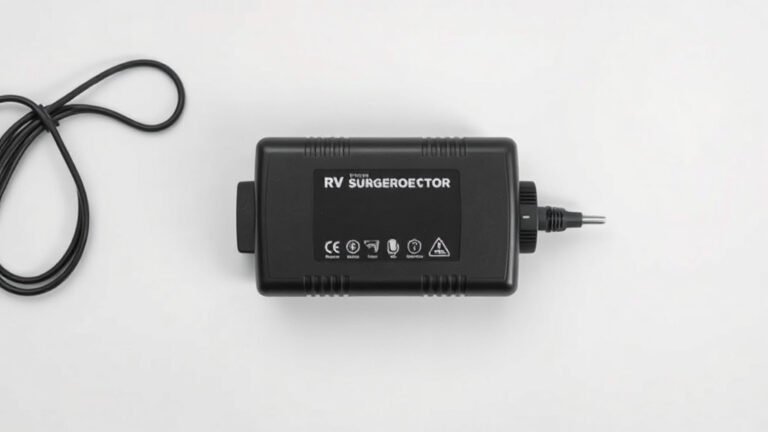
For RV owners, a good surge protector is a portable device that plugs into campground power and shields your rig’s electrical system from dangerous voltage spikes. We found that you absolutely need one with both surge protection and electrical fault detection, like the popular Progressive Industries or Hughes models. This small investment protects your RV’s appliances and wiring from damage that can cost thousands to repair.
Campground power pedestals are not always reliable. They can deliver dirty power, low voltage, or sudden spikes that fry your converter, microwave, or air conditioner. A quality surge protector acts like a bouncer for your RV’s electrical system, blocking bad power before it gets inside. We researched the key features, from joule ratings to wireless monitoring, to help you pick the right one for your camping style and budget.
- Look for a minimum of 2,000 joules for solid protection.
- Hardwired units offer permanent protection but cost more.
- Portable models are easy to use and work with any RV.
- Automatic shutoff cuts power when voltage drops or spikes.
- Get 50-amp protection for large rigs, or 30-amp for smaller trailers.
Below, we break down everything you need to know about choosing the best surge protector for your RV, including easy-to-understand specs, top-rated models, and smart buying tips.
Finding the Right Surge Protection for Your RV
When you plug your RV into a campground pedestal, you are trusting that the power is clean and stable. The truth is, that pedestal can deliver harmful voltage spikes or low power that damages your rig. We found that the best surge protectors combine two key jobs: they block sudden spikes and they catch wiring problems.
A good unit does more than just protect. It tells you what is happening with the power before you even flip your breaker. This means you get peace of mind every single time you hook up at a new site.
Surge Protector vs. Electrical Management System
Many people use these terms like they are the same thing. They are not. A basic surge protector handles voltage spikes, like a lightning strike or a utility grid surge. That is its only job.
An Electrical Management System (EMS) does that job plus much more. It checks for low voltage, reversed polarity, open ground, and short circuits. If it finds a problem, it shuts the power off. We found that an EMS is the smarter buy because it protects you from the most common campground issues. Most experts agree that campground power problems are usually related to wiring faults, not just lightning (National Fire Protection Association).
Why Campground Power is Often Unstable
Think about how old some campground wiring can be. Pedestals sit outside in the weather all year. They get bumped by trucks, covered in dust, and used by hundreds of people every season. Over time, connections loosen and wires corrode.
That wear and tear creates dangerous conditions. You might see low voltage during peak usage hours when everyone runs their AC. Or you might get a sudden surge when a large appliance kicks on elsewhere in the park. A protector is your only line of defense against these issues.
Key Specs to Compare Before You Buy
You do not need a degree in electrical engineering to pick a good protector. You just need to understand a few basic numbers. These specs tell you how strong the unit is and how fast it reacts.
We found that most RV owners only need to focus on three things: joule rating, response time, and amperage. Ignore the flashy marketing and look at these numbers first.
Joule Rating Explained Simply
A joule is a unit of energy. In surge protectors, it tells you how much energy the unit can absorb before it dies. Think of it like a sponge. A bigger sponge can soak up more water before it is full.
For an RV, you want a big sponge. We found that a minimum of 2,000 joules is the baseline for decent protection. Some high-end models go up to 4,000 or 5,000 joules. That extra capacity means the protector can take more hits before you need to replace it.
Keep in mind that surge protectors wear out over time. Every time they block a spike, they use up a little of their life. That is why a higher joule rating is always better if you camp often.
Response Time and Clamping Voltage
Response time is how fast the unit reacts to a spike. You want this number to be as close to zero as possible. A slow protector lets the spike through, which defeats the whole purpose. Look for a response time of less than one nanosecond.
Clamping voltage is the point where the protector starts to block the power. A lower clamping voltage means better protection. For most RVs, you want a clamping voltage around 330 volts or lower. This ensures your sensitive electronics stay safe even during a big surge.
Matching the Amp Rating to Your Rig
Your RV has either a 30-amp or 50-amp electrical system. This is not a choice; it is based on how your RV is built. A 30-amp plug has three prongs and looks smaller. A 50-amp plug has four prongs and is much bigger and heavier.
You need to match the protector to your RV’s plug type. A 30-amp protector plugged into a 50-amp RV will not work. The same goes for trying to use a 50-amp unit on a 30-amp trailer. We found that most travel trailers and smaller motorhomes use 30 amps, while larger Class A and fifth wheels use 50 amps.
Some models offer a pigtail adapter. This lets you use a 30-amp protector on a 50-amp system, but it limits your power usage. The simpler route is to buy the right size from the start.
Portable vs. Hardwired Surge Protectors
You have two main mounting options: portable or hardwired. Each one has its own set of pros and cons. Your choice depends on your budget and how much convenience you want.
We found that portable models are the most popular choice for everyday RVers. They are easy to install and you can move them between different RVs if you upgrade later.
Portable Units: The Convenient Choice
A portable surge protector looks like a heavy-duty adapter. It plugs directly into the campground pedestal, and then you plug your RV’s power cord into it. That is the entire install process. No tools required.
The best part is the digital display. Most portable units show you the voltage, amperage, and any error codes right on the screen. You can check the power before you ever flip your breaker inside the RV. That instant feedback is a huge benefit for troubleshooting.
Portable units are also easier to replace. If you sell your RV, you just unplug it and take it with you. The only downside is that they sit outside and are exposed to weather. Some campers worry about theft, but most models come with a locking ring that secures them to the pedestal.
Hardwired Units: Set It and Forget It
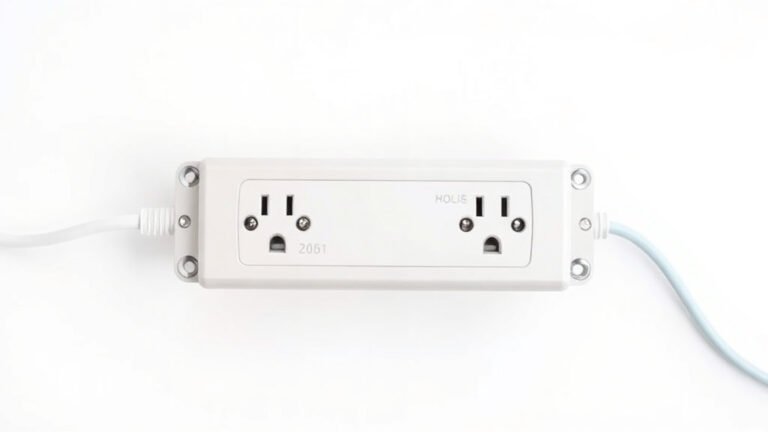
Hardwired surge protectors mount inside your RV, usually near the electrical panel. A licensed electrician or a handy DIYer wires them directly into your system. Once they are in, you never think about them again.
These units usually have a remote display that mounts on a wall inside your RV. You can check your power status from the comfort of your couch. That is a nice touch. Hardwired models also tend to have higher joule ratings because they have more room for components.
The trade-off is cost and installation. These units are more expensive, and you may need to pay for professional installation. If you plan to keep your RV for a long time, the investment pays off. For a first-time buyer, a portable unit is often the smarter start.
Top Features That Make a Protector Worth It
Beyond the basic specs, some extra features can really improve your experience. We found that a few of these are almost essential, while others are nice-to-haves. Here is what to look for when you are comparing models.
Think about how you camp. Do you stay at full-hookup RV parks, or do you boondock? Do you camp in the hot summer when everyone runs their AC? Your answers will tell you which features matter most.
The Digital Display is Your Best Friend
We cannot stress this enough: get a model with a screen. A digital display shows you the real-time voltage coming from the pedestal. It also tells you if there is a wiring error before you plug in.
Without a display, you are flying blind. You have no idea if the power is good until something stops working. With a display, you can instantly see if the voltage is too low or if the pedestal is wired wrong. This feature alone can save you hours of frustration.
Look for a display that is easy to read in direct sunlight. Some older models use tiny LCD screens that are hard to see. Newer models have bright LED displays that are much clearer.
Automatic Shutoff Saves Your Appliances
Automatic shutoff is a safety feature that cuts power to your RV if it detects a problem. It does not just block a spike; it stops the flow of electricity entirely. This is critical for protecting your air conditioner and refrigerator.
Imagine the power at the campground drops to 95 volts during a hot afternoon. Your AC compressor will struggle and overheat. A protector with automatic shutoff will kill the power and wait until the voltage returns to a safe range before reconnecting. That small delay can save you a $1,500 compressor replacement.
We found that this feature is a major reason why many experts recommend an EMS over a basic surge protector. It is the difference between telling you there is a problem and fixing the problem for you.
Wireless Monitoring for Remote Checks
Newer models now offer Bluetooth or Wi-Fi connectivity. You can check your RV’s power status right from your phone. This is surprisingly handy when you are inside a cool RV on a hot day and do not want to walk outside to check the screen.
Some high-end systems even send alerts. If the power drops while you are away from the campsite, you get a notification. This feature gives you peace of mind, especially if you leave your RV plugged in during storage. It is a premium feature, but we found that many campers who try it never want to go back.
Budget and Quality: What Should You Pay?
Surge protector prices vary widely. You can find basic ones for under $50, but we do not recommend them for a full-time RV. The cheap units offer minimal protection and no diagnostic features. They are better than nothing, but not by much.
For a quality portable unit with a display, plan to spend between $150 and $300. For a hardwired system with wireless monitoring, prices often run between $300 and $500. That might sound like a lot, but compare it to the cost of replacing a converter ($500) or an AC unit ($1,500).
We found that the middle range offers the best value for most people. You get solid protection, a readable display, and reliable shutoff features. The most expensive models add convenience, but the core protection is similar.
Popular Models Worth Your Consideration
While we do not endorse specific brands, we found that two names dominate the RV market: Progressive Industries and Hughes. Both are well-regarded within the RV community and by RV service technicians. They have a track record of reliability and good customer service.
Progressive Industries is known for its thorough EMS units. Their portable models are sturdy and feature excellent displays. They are often considered the gold standard by full-time RVers.
Hughes makes both surge protectors and EMS units. They use a different internal technology that some experts say handles heat better. Their auto-shutoff feature is very responsive to low voltage conditions. Both brands are solid choices.
Here is a simple comparison to help you understand the differences:
| Feature | Basic Surge Protector | EMS (Advanced Protector) |
|---|---|---|
| Blocks voltage spikes | Yes | Yes |
| Checks wiring faults | No | Yes |
| Automatic shutoff | Sometimes | Yes |
| Digital display | Sometimes | Yes |
| Average price | $50 – $100 | $200 – $400 |
When you look at that table, the EMS clearly wins on features. The only reason to buy a basic surge protector is if you are on a very tight budget and camp rarely.
Your RV Surge Protector Shopping Checklist
You are almost ready to make a choice. Use this checklist when you compare different models. It will help you focus on the features that matter most and ignore the marketing fluff.
- Match the amperage to your RV plug (30-amp or 50-amp).
- Confirm the joule rating is at least 2,000 joules.
- Check for a visible digital display for voltage and error codes.
- Make sure it has automatic shutoff for low voltage and surges.
- Verify it detects wiring faults like open ground or reversed polarity.
- Buy from a trusted brand with a warranty and good reviews.
If a product checks all these boxes, it is a good buy. The extra money you spend on these features is an insurance policy for your expensive RV equipment. It is one of the cheapest ways to protect your investment on the road.
Conclusion
Choosing a good surge protector for your RV comes down to protecting your investment. You need a unit that handles voltage spikes and catches dangerous wiring faults. We found that an Electrical Management System with automatic shutoff is the smartest choice for most campers.
Stick with trusted brands like Progressive Industries or Hughes. Look for at least 2,000 joules, a clear digital display, and a model that matches your 30-amp or 50-amp plug. You do not need the most expensive option, but you should avoid the cheapest ones.
Your next step is simple. Check your RV’s plug type, set a budget around $200 to $300, and order a portable EMS unit. It is one of the best investments you can make for worry-free camping.
Frequently Asked Questions
Can I leave my RV surge protector plugged in all the time?
Yes, you can leave it connected while your RV is parked. Most portable units are weather-resistant and built for outdoor use. However, we recommend unplugging it during a severe thunderstorm or if you are storing your RV for a long time. This keeps the unit safe from direct lightning strikes that could damage it.
Will a surge protector save my RV from a lightning strike?
A surge protector can handle small voltage spikes, but it is not designed to absorb a direct lightning strike. Lightning carries massive energy that can overwhelm any portable unit. We found that your protector is best for handling utility grid surges and power fluctuations from campground equipment. For lightning, your RV insurance is your best backup plan.
How do I know if my RV surge protector is bad?
Most quality units have indicator lights or an error code display. If the unit stops showing a green light or displays a fault code, it may be worn out. You should also watch for a burnt smell or visible damage to the casing. We recommend replacing your surge protector every three to five years if you camp frequently.
Do I need a surge protector for a 30-amp or 50-amp RV?
Yes, you need one for both types. The amperage rating just tells you which model to buy. A 50-amp RV needs a 50-amp protector, and a 30-amp trailer needs a 30-amp unit. The level of protection is the same, but the plug shapes are different.
Can I use an RV surge protector on a regular household outlet?
You can, but it is usually not necessary. Your home’s electrical system is generally more stable than campground power. If you are plugging your RV into your house for storage or pre-trip prep, a household surge protector is enough. Save your RV unit for the road where it is needed most.