Do You Need a Surge Protector for Your RV?
Yes, you absolutely need a surge protector for your RV. Your RV is packed with expensive electronics, and campground power can be unpredictable. A surge protector is a simple device that protects your rig from sudden power spikes, which can destroy your appliances in a split second. It is a small investment for serious peace of mind.
We found that many RV owners skip this essential piece of gear until it’s too late. A single lightning strike or a faulty power pedestal at a campsite can fry your converter, TV, or refrigerator. Unlike your home, an RV doesn’t have a whole-house surge system built-in. You are plugging directly into a park’s power source, which has its own set of risks.
TL;DR — Here’s the quick breakdown:
- You need one: It is the cheapest insurance for your RV’s electrical system.
- It prevents damage: It blocks power spikes and surges before they reach your appliances.
- It checks the pedestal: Most units also check for bad wiring and reverse polarity, which are common at campgrounds.
- Different types exist: You can choose between a basic surge protector or a smart one that shuts off power when it detects a problem.
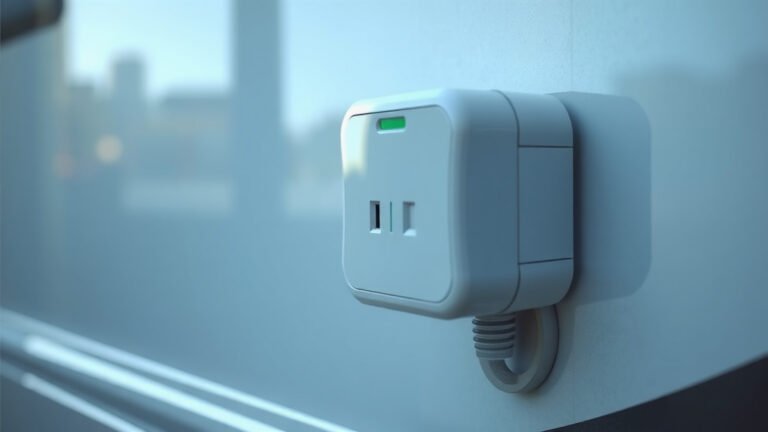
- It is easy to use: You simply plug it into the power pole, then plug your RV cord into it.
Below, we’ll walk you through exactly why this matters, what to look for, and how to choose the right one for your travel style. Let’s get your RV protected so you can relax on your next trip.
Why Your RV Needs Surge Protection More Than Your House Does
You might think your RV is like a mini house on wheels. And you are right, in many ways. But your home has a massive electrical system with grounding rods, breakers, and a whole network designed to handle spikes. Your RV has none of that. It is a rolling appliance plugged into an outlet that someone else maintains.
We found that campground power pedestals are often old, worn out, and poorly grounded. A report from the RV Industry Association suggests that electrical issues are one of the top causes of RV equipment failure. You are trusting a stranger’s wiring with your $3,000 refrigerator and your $1,500 television. That is a risky bet.
At home, a surge from the grid gets absorbed by your house’s system. In an RV, that surge goes straight into your converter and then into every device connected to your 12-volt system. It is a direct hit with no buffer. That is why a dedicated RV surge protector is a non-negotiable piece of gear.
Think of it like this: you would not plug a $2,000 laptop into a frayed extension cord at a construction site. Why would you plug your entire mobile home into a rusty power pole in a thunderstorm? The logic is the same. Protect the investment before the damage happens.
What Actually Happens During a Power Surge
Surges are not always dramatic. You do not need a lightning strike to destroy your gear. Most surges are small, quick spikes in voltage that last a fraction of a second. They happen when a large appliance kicks on nearby, like an air conditioner at the site next to you, or when the park’s transformer struggles during peak hours.
These tiny spikes build up over time. They slowly degrade your electronics until one day, they just stop working. It is like death by a thousand cuts. A surge protector clips those spikes off at the source so your devices only see clean, stable power.
Lightning is the big one, sure. But the everyday surges are what kill most RV appliances. Many experts say that a surge protector is not about the one big event. It is about filtering out the constant noise and fluctuation that campgrounds provide on a daily basis.
The Hidden Dangers at Campground Power Pedestals
We have talked about surges, but that is only half the story. Campground pedestals have other problems that can be just as damaging. These issues have nothing to do with lightning or spikes. They are simple wiring mistakes that can fry your rig instantly.
Reverse polarity is a big one. That means the hot and neutral wires are swapped inside the pedestal. If you plug in without checking, you can energize the chassis of your RV. That is a serious shock hazard for you and your family. A good surge protector checks for this before it lets power through.
Open ground is another common issue. The ground wire is missing or broken. Without a proper ground, your surge protector cannot do its job, and you are vulnerable to stray currents. These problems are invisible to the naked eye. You need a device with a brain to catch them.
Surge Protector vs. Electrical Management System
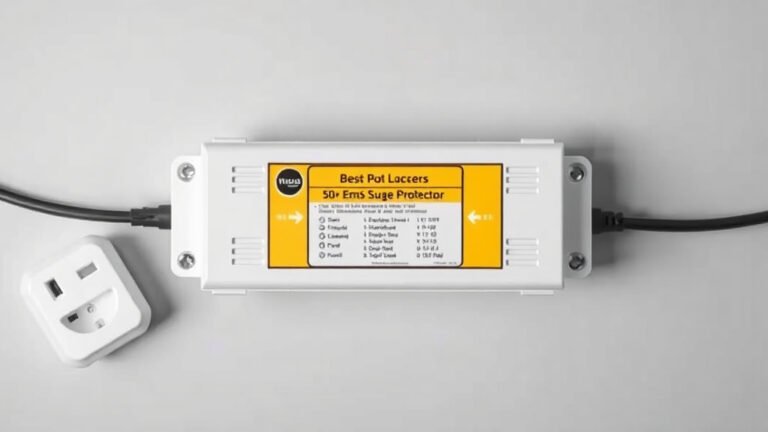
There is a difference between these two devices, and you need to know it before you buy. A basic surge protector just blocks high voltage spikes. It is a simple filter that sits between the pedestal and your RV. It does not care about low voltage or bad wiring.
An Electrical Management System (EMS) is the smarter, more advanced cousin. It monitors the incoming power constantly. If the voltage drops too low, or spikes too high, or the wiring is wrong, the EMS shuts off the power to your RV completely. It is a gatekeeper, not just a filter.
We found that many experienced RVers recommend the EMS over a basic surge protector. The price difference is noticeable, but the protection is much broader. You are not just guarding against surges. You are guarding against every electrical fault that could occur at a campsite.
Why Low Voltage Is Just as Dangerous as High Voltage
Most people worry about high voltage spikes. But low voltage is a silent killer in the RV world. When voltage drops, your air conditioner and refrigerator motors work harder to compensate. They draw more amperage, which generates heat. That heat melts wires and burns out compressors.
An EMS catches this and shuts down the power before damage occurs. A basic surge protector does nothing about low voltage. It just lets the weak power through, and your appliances suffer. If you camp in hot climates and run your AC often, low voltage protection is a must-have feature.
How to Pick the Right Surge Protector for Your Setup
Choosing the right unit is not complicated, but you need to know a few key numbers. First, you need to match the amperage of your RV. Most RVs are either 30-amp or 50-amp. A 30-amp unit will not work on a 50-amp plug, and vice versa. Check your RV’s power cord to see what you have.
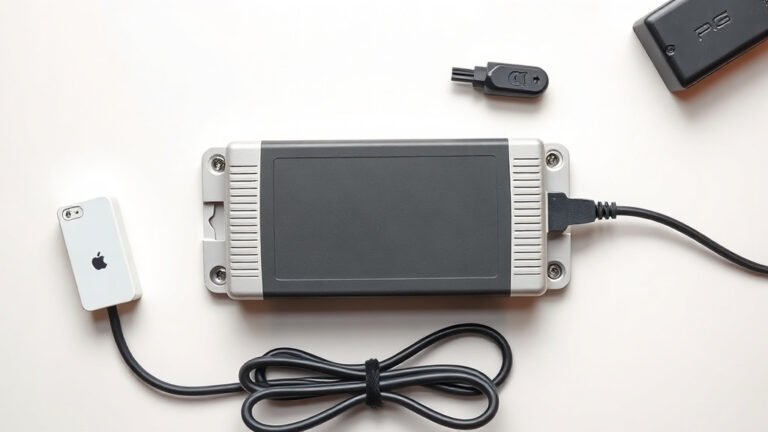
You also need to decide between a hardwired unit and a portable one. Hardwired units are installed inside your RV, usually near the electrical panel. They are always on and cannot be stolen. Portable units plug into the pedestal, and you plug your cord into them. They are easier to install but can walk away if you are not careful.
| Feature | Basic Surge Protector | Electrical Management System |
|---|---|---|
| Blocks power spikes | Yes | Yes |
| Checks for reverse polarity | Sometimes | Yes |
| Checks for open ground | No | Yes |
| Shuts off on low voltage | No | Yes |
| Shuts off on high voltage | No | Yes |
| Average cost range | $50 to $150 | $200 to $500 |
We found that most full-time RVers invest in an EMS. Weekend campers on a budget can get away with a basic surge protector. But the EMS is worth the extra money if you spend more than a few weeks a year on the road. It is a one-time cost that protects a very expensive asset.
Joules and Clamping Voltage Explained Simply
You will see two numbers on every surge protector box: joules and clamping voltage. Joules measure how much energy the protector can absorb before it gives up. Higher is better. Look for at least 1,000 joules for an RV. Some heavy-duty units go up to 3,000 or more.
Clamping voltage is the point where the protector kicks in and starts blocking the surge. Lower is better. You want a clamping voltage of 330 volts or less. That means the protector reacts quickly to stop the spike before it reaches your appliances. These two numbers tell you how strong and how fast your protection is.
Setting Up Your Surge Protector the Right Way
Using a portable surge protector is simple. Plug it into the pedestal first. Then plug your RV cord into the surge protector. Some units have a digital display that shows the incoming voltage and any wiring errors. Wait a few seconds and watch the display before you flip your breaker on.
If the unit detects a problem, it will show an error code and cut the power. Do not bypass it. Do not try to override the system. If it says there is a wiring fault, find another pedestal or ask the campground host for help. Trust the device. It is smarter than you when it comes to electricity.
One tip we found useful: keep your surge protector covered from rain. Many portable units are weather-resistant, but not fully waterproof. A simple plastic bag over the top can prevent moisture from getting into the connections. Water and electricity do not mix, and you do not want to test that theory.

Common Mistakes RV Owners Make With Surge Protectors
We see the same errors over and over again in campgrounds. The most common mistake is buying a cheap household surge protector from a hardware store. Those are not built for RV use. They do not handle the amperage, and they do not check the wiring. They are a false sense of security.
Another mistake is using an adapter to change a 50-amp plug to a 30-amp. Some RVers think they can just plug a 50-amp surge protector into a 30-amp pedestal with an adapter. That does not protect your RV properly. You need a unit that matches your RV’s actual electrical configuration.
The biggest mistake is waiting until after something breaks to buy one. We cannot tell you how many stories we have heard about a fried converter or a melted power cord. The cost of replacing one appliance is more than the cost of a good surge protector. Do the math. It makes no sense to gamble.
A Quick Checklist Before You Plug In Anywhere
You can use this simple checklist every time you set up camp. It takes about two minutes and can save you thousands of dollars. Make it a habit, and you will never have to worry about campground power again.
- Check the pedestal visually. Look for burn marks, rust, or loose connections. If it looks bad, it probably is bad.
- Confirm your amperage. Make sure your surge protector matches your RV’s plug type before you connect anything.
- Plug in the protector first. Connect it to the pedestal, then attach your RV cord to the protector.
- Read the display. Check for error codes or warning lights before you turn on your main breaker.
- Test the GFCI. If your pedestal has a GFCI outlet, press the test button and make sure it trips.
- Keep it dry. Protect the connection from rain and moisture with a cover or a bag.
We found that following this simple routine eliminates almost all electrical problems at campgrounds. It is not about being paranoid. It is about being prepared. Your RV is a big investment, and a few minutes of caution is a small price to pay for peace of mind.
Campground power is unpredictable, and we have seen it cause serious damage to rigs that were not protected. The research is clear: surge protectors and EMS units save money and prevent headaches. Do not learn this lesson the hard way. Get your RV protected before your next trip, and you will sleep better knowing your home on wheels is safe.
Conclusion
You have one job before your next trip: protect your RV’s electrical system. We covered why campground power is unreliable, how surges and low voltage damage your gear, and why a basic protector is not always enough. The bottom line is simple. Your RV needs surge protection every single time you plug in.
Start with a quality unit that matches your RV’s amperage. If you camp often or run heavy appliances, step up to an EMS for full coverage. It is a one-time cost that protects thousands of dollars in equipment. Do not wait for a fried converter or a melted cord to convince you. Buy your surge protector today and plug in with confidence tomorrow. Your wallet and your appliances will thank you.
Frequently Asked Questions
Can I use a regular household surge protector in my RV?
No, you should not use a household power strip or surge protector for your RV. They are not built to handle the amperage your RV draws, and they do not check for wiring problems like reverse polarity. You need a unit specifically rated for RV use. A household protector gives you a false sense of security and can fail when you need it most.
Will a surge protector stop my RV from getting struck by lightning?
No device can stop a direct lightning strike. That kind of power is too massive for any portable protector to absorb. What a surge protector does is handle the smaller spikes and surges that come from the grid and nearby appliances. It protects you from everyday electrical noise, not acts of God. If lightning is close, unplug your RV entirely for the best protection.
Do I need a surge protector if I only camp a few weekends a year?
Yes, even occasional campers need protection. It only takes one bad pedestal or one power spike to ruin your converter or refrigerator. You do not need to be a full-timer to face electrical risks. A basic surge protector is cheap enough that even weekend campers should not skip it. Consider it part of your essential camping gear, just like a leveling block or a water hose.
What does the error code E1 or E2 mean on my surge protector?
These codes vary by brand, but they almost always indicate a wiring problem at the pedestal. E1 usually means reverse polarity, and E2 often points to an open ground. Do not try to override these codes. Move to a different pedestal or ask the campground host to fix the issue. Your surge protector is telling you the power is unsafe, and you should trust it.
How long does an RV surge protector last before it needs replacing?
Most quality surge protectors last for years, but they do wear out over time. Every surge they absorb reduces their capacity slightly. Check the indicator light on your unit regularly. If the protection light is off or the unit shows signs of damage, replace it. Many RVers replace their surge protector every three to five years as preventive maintenance, especially if they camp frequently.