RV Surge Protector Size: What You Need
For most RVs, you need a 30-amp or 50-amp surge protector that matches your RV’s power cord. Check the plug on your shore power cord. If it has three prongs, you need a 30-amp unit. If it has four prongs, you need a 50-amp unit. That is the simple answer to what size surge protector you need for your RV.
Beyond the amp rating, you also want to consider surge protection in joules (the higher, the better) and whether you need a smart protector with a digital display. We found that a good quality unit with at least 1,000 to 2,000 joules offers solid protection for typical RV use. You also have to decide between a portable model that plugs into the pedestal or a hardwired unit installed inside your RV.
- Match the amps: Always choose 30-amp or 50-amp to match your RV’s plug.
- Check the joules: Look for at least 1,000 joules; 2,000 or more is even better.
- Get surge + protection: A surge protector guards against power spikes, while an electrical management system (EMS) also catches wiring faults.
- Pick your style: Portable units are simple to use; hardwired units are permanent and always on.
- Think about the display: A digital readout tells you if the pedestal power is safe before you plug in.
Below, we break down everything you need to know about choosing the perfect surge protector size for your rig, plus the extra features that are actually worth your money. Let’s walk through this together so you can plug in with total confidence.
Figuring Out the Right Surge Protector Size for Your Rig
You need to match the surge protector to your RV’s electrical system. That starts with the amp rating. Most RVs fall into one of two camps: 30-amp or 50-amp. This number is printed on your shore power cord’s plug. It also appears near your power panel inside the rig. Get this wrong, and nothing will work correctly. It’s like buying shoes for the wrong foot — frustrating and pointless.
We found that checking the plug is the fastest way to know what you need. A 30-amp plug has three prongs. A 50-amp plug has four prongs. That simple visual check answers the amp question in seconds. Make sure you do this before buying anything. Trust us, returning a giant electrical box is a pain.
What Amps Mean for Your RV’s Power
Amps measure the flow of electricity. Think of it like a water pipe. A 30-amp pipe delivers a certain amount of water (power). A 50-amp pipe delivers more. Your RV is built to handle a specific flow. Using a 50-amp protector on a 30-amp RV won’t give you more power. It just won’t fit your plug. The reverse is dangerous — a 30-amp protector on a 50-amp RV is a fire hazard.
Many experts say that matching the amp rating is the most critical factor. There is no adapter that makes it okay. Your RV’s cord physically won’t connect to the wrong protector. So, check the prongs. Three prongs mean 30 amps. Four prongs mean 50 amps. That is your starting point for size.
Understanding Surge Protection Ratings and Joules
Amps tell you the size. Joules tell you the strength. A joule is a unit of energy. A surge protector absorbs this energy to keep it away from your RV. The higher the joule rating, the more protection you get. We found that a unit with at least 1,000 joules is a good baseline for typical RV use.
Higher joule ratings mean longer life. Every surge eats away at the protector’s capacity. A 2,000-joule unit will last longer than a 1,000-joule unit. It can handle bigger spikes. It offers more peace of mind. Many guidelines point to 2,000 joules as a sweet spot for RVs (Consumer Reports).
Why Higher Joule Ratings Matter More Than You Think
Imagine a sponge. A small sponge (1,000 joules) soaks up a little water. A big sponge (2,000 joules) soaks up a lot more. Power surges are like water spills. You want the biggest sponge you can get. Your RV’s electronics are expensive. A bigger sponge protects them better.
Cheap surge protectors often have low joule ratings. They might handle one big surge, then die. That leaves you unprotected for the next one. You need a unit that survives multiple events. We found that spending a little extra for higher joules is a wise investment for your RV’s safety. Don’t skimp on this.
Clamping Voltage: The Other Number to Watch
Clamping voltage is the point where the protector kicks in. Lower is better. A lower clamping voltage (like 330V) reacts faster. It stops the surge sooner. A higher clamping voltage (like 400V) lets more power through before acting. Look for the lowest clamping voltage you can find. It works hand-in-hand with the joule rating.
Response time also matters. It’s measured in nanoseconds. Faster is better. The surge protector should react instantly. A delay of even a tiny fraction of a second can let damaging power through. Most quality units respond in under one nanosecond. That’s plenty fast to protect your gear.
Portable vs. Hardwired Surge Protectors
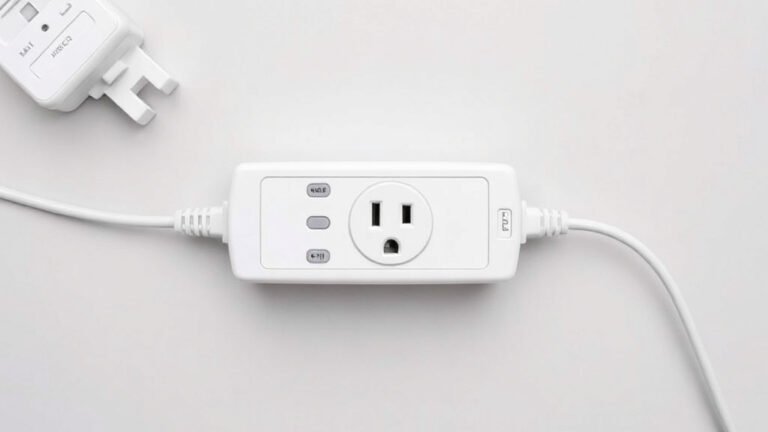
You have two main style choices. Portable units plug into the campground pedestal. Your RV’s cord then plugs into the protector. Hardwired units are installed inside your RV. They’re connected directly to your electrical system. Each style has its pros and cons. Let’s break them down so you can decide.
Portable units are the most popular choice for most RVers. They’re easy to use. You just plug them in. They also show you the pedestal’s power status before you connect. Hardwired units are always on. You never forget to plug them in. They protect your RV even if someone borrows your cord.
| Feature | Portable Unit | Hardwired Unit |
|---|---|---|
| Installation | Plug and play | Requires installation |
| Display | Visible at pedestal | Inside RV |
| Portability | Move between RVs | Stays with RV |
| Theft Risk | Can be stolen | Secure inside |
| Cost | Generally lower | Generally higher |
Why Portable Protectors Are Great for Beginners
Portable units are foolproof. You plug them into the shore power pedestal first. Then you plug your RV cord into them. They often have lights or a digital screen. This tells you if the power is safe. Many experts say that portable units give you instant feedback about the campground’s wiring. That’s a huge advantage if you stay at different parks.
We found that portable protectors are also great if you upgrade RVs later. You can keep the same unit. Just make sure the amp rating matches. Their simplicity is a big draw. No tools, no wiring, no hassle. Just plug in and go. That’s the RV lifestyle you want, right?
Hardwired Protection for Permanent Peace of Mind
Hardwired units are installed once. They become part of your RV. You never have to worry about theft. You never forget to use it. It’s always there, always protecting. This is a great option for full-time RVers or those with expensive setups. You set it and forget it.
The downside is the installation. You might need an electrician, which costs money. It also doesn’t tell you about pedestal issues before you plug in. You have to plug in to see the readout. Some hardwired units can disconnect power automatically if they detect a problem. That’s a powerful feature for protecting your appliances.
Smart Protectors vs. Basic Surge Protectors
A basic surge protector is just that — protection against spikes. A smart protector, often called an Electrical Management System (EMS), does much more. It checks for wiring faults. It looks for low voltage, high voltage, and reverse polarity. These issues can damage your RV even without a surge.
We found that an EMS is worth the extra money for serious RVers. It’s like having a safety inspector at the pedestal. It checks everything before letting power through. Basic surge protectors only catch spikes. An EMS catches a broader range of problems. This is a critical difference.
What an EMS Actually Checks For
- Open ground: A missing ground wire is a shock hazard.
- Reverse polarity: Wires are swapped, which can fry electronics.
- High voltage: A surge or brownout can damage your AC unit.
- Low voltage: Underpowered pedestals can overwork your appliances.
- Miswired pedestals: Bad wiring is more common than you think in older parks.
Each of these issues can cause serious damage. An EMS will shut down the power if it finds a problem. This protects your RV from costly repairs. Many experts say that an EMS is the best insurance for your RV’s electrical system. It’s a small price for huge peace of mind.
Digital Displays Are Worth It
A digital display shows you exactly what’s happening. You see the voltage in real time. You see the amp draw. You know if the power is stable. This information helps you diagnose problems before they become catastrophic. You’re not guessing — you’re informed.
Some units even remember error codes. This helps you explain issues to a campground host or electrician. It gives you a history of what happened. That’s a lot more useful than a simple light turning red. The display turns the surge protector from a simple device into a valuable diagnostic tool.

A Quick Guide to Matching Protector Size
Now you know the basics. Let’s put it all together. Sizing your surge protector isn’t complicated. It’s about matching your RV’s system and choosing the right features. Here’s our simple process for finding the right one. Follow these steps, and you’ll get it right every time.
First, identify your RV’s amp rating. Check the plug on your shore power cord. Count the prongs. Three prongs mean 30 amps. Four prongs mean 50 amps. This is your non-negotiable starting point. There’s no way around it. You must match this number exactly.
The 30-Amp Surge Protector Choice
If you have a 30-amp RV, you need a 30-amp protector. This is common on smaller trailers, pop-ups, and some Class B vans. Look for a unit with at least 1,000 joules. We found that many 30-amp units come with a digital display as a standard feature now. That’s a good sign. It means you’re getting more value for your money.
These units are smaller and lighter. They’re easy to plug into the pedestal. The 30-amp plug has three prongs — one is L-shaped. This ensures you can’t plug it in wrong. It also means you can’t accidentally use it on a 50-amp outlet. The physical design keeps you safe.
The 50-Amp Surge Protector Choice
If you have a 50-amp RV, you need a 50-amp protector. These are found on larger fifth wheels, motorhomes, and toy haulers. These protectors are bigger and heavier. They handle more power. Look for a unit with 2,000 joules or more. This gives you the best protection for larger air conditioners and appliances.
A 50-amp plug has four prongs. It’s a larger, heavier connector. It also uses a different outlet configuration. That means you can’t plug a 30-amp cord into a 50-amp protector. The physical design prevents mismatches. This is a good safety feature built right into the hardware.
Your Pre-Trip Surge Protector Checklist
Before you hit the road, make sure you have the right gear. This quick checklist will help you prepare. It covers the basics so you’re not stuck at a campground with the wrong equipment. Ready? Here we go.
- Check your plug type: Count the prongs to confirm 30-amp or 50-amp.
- Match the amps: Buy a surge protector with the exact same amp rating.
- Look for high joules: At least 1,000; 2,000+ is ideal for maximum protection.
- Decide on an EMS: Choose a smart protector over a basic unit if your budget allows.
- Consider a digital display: It shows you voltage and error codes for easier troubleshooting.
- Buy a weatherproof cover: Protect the connection from rain and moisture.
Working through this list takes about five minutes. It saves you from headaches down the road. You’ll arrive at your campsite with total confidence. No guessing, no worrying, just safe and steady power for your home-on-wheels. That’s the goal, and this checklist gets you there. Now go enjoy the open road.
Conclusion
Choosing the right surge protector for your RV comes down to one simple rule: match the amps. Check your shore power cord plug. Three prongs mean 30 amps. Four prongs mean 50 amps. That’s the foundation of your decision.
From there, aim for at least 1,000 joules, but 2,000 or more gives you longer-lasting protection. We recommend a smart protector with a digital display. It catches wiring faults that basic units miss entirely. That extra layer of safety is worth every penny when you’re protecting expensive electronics.
So, before your next trip, look at your RV’s plug and order the right size today. You’ll camp with total peace of mind knowing your rig is safe from power surprises.
Frequently Asked Questions
Can I use a 30-amp surge protector on a 50-amp RV?
No, you should never do this. A 30-amp protector won’t physically connect to a 50-amp plug. Even with an adapter, you’d create a serious fire hazard. Always match the amp rating exactly to your RV’s shore power cord. It’s a safety issue, not just a compatibility one.
How many joules do I really need for RV surge protection?
We found that 1,000 joules is the minimum you should consider for basic protection. However, 2,000 joules is a much safer choice for most RVers. Higher joule ratings mean the protector can absorb bigger surges and survive more of them over time. Your RV’s electronics are expensive, so don’t underspend on this.
Will a surge protector stop damage from a lightning strike?
A surge protector can help with close calls, but a direct lightning strike is a different story. Even the best units can’t handle a massive direct hit. The safest approach is to unplug your RV during severe storms whenever possible. Think of the surge protector as protection from everyday spikes, not a lightning rod guarantee.
Do I need a surge protector if I only camp at nice RV resorts?
Yes, you absolutely do. We found that even upscale parks can have faulty wiring or older pedestals that cause problems. Surges and voltage spikes can happen anywhere, at any time. That’s why many experts recommend protection for every single campsite, not just budget-friendly ones. Don’t let a nice-looking park give you false confidence.
Is it okay to leave my surge protector plugged in during rain?
Most quality surge protectors are weather-resistant, but you still need to be careful. Always make sure the unit is mounted so water can’t pool around the plug connections. You might also want to pick up a weatherproof cover for the pedestal connection. Even weather-rated units don’t like standing water, so a simple cover adds an extra layer of safety.