Do RV Surge Protectors Really Work? A Guide
Yes, RV surge protectors work, and they can save your camper’s electrical system from costly damage. We found that a good surge protector blocks dangerous power spikes before they reach your RV. This simple device is a must-have for any RVer who plugs into campground power.
Your RV’s electronics are sensitive. A sudden lightning strike or a faulty power pedestal can fry your converter, refrigerator, or TV in a split second. Many experts say that surge protectors are cheap insurance compared to the cost of replacing your RV’s electrical components. They act like a power strip, but with a much stronger and more important job.
- Surge protectors work by clamping down on voltage spikes and diverting excess power to the ground.
- They protect your RV’s appliances, TV, and electronics from sudden power surges.
- Basic models guard against spikes, while Electrical Management Systems (EMS) also protect against low voltage, open neutrals, and wiring faults.
- Without one, you risk thousands of dollars in damage from a single bad power pedestal.
- An EMS gives you a digital readout of the power quality before you connect your rig.
Below, we break down exactly how these devices work, the difference between surge protection and power management, and how to pick the right one for your setup. Let’s walk through it step by step so you can plug in with total peace of mind.
Why Your RV Electrical System Needs Protection
You plug your rig into a campground pedestal, and you expect power to flow safely. But that pedestal has been through a lot. Rain, heat, and dozens of other RVs have worn it down. We found that many pedestals have loose wires or hidden faults that can damage your RV in an instant.
Think of your RV’s electrical system like your home’s heart. A sudden spike is like a mini heart attack for your appliances. The surge protector is the defibrillator that steps in before things go wrong.
We found that most RV owners don’t realize how fragile their electronics really are. Your converter, microwave, and even your laptop charger all rely on a steady, clean power flow. Any interruption can cause expensive failures.
The Real Cost of a Power Surge
We found that replacing a single RV refrigerator can cost over a thousand dollars. A converter can set you back several hundred. Now compare that to the price of a decent surge protector, which usually runs between fifty and two hundred dollars. That is a no-brainer trade.
Many experts say that campground power is the number one cause of electrical failures in RVs. It is not a matter of if you will face a bad pedestal, but when. You want to be ready when it happens.
What a Surge Actually Does to Your Gear
A power surge is a quick jump in voltage that lasts for a tiny fraction of a second. It can be caused by lightning, utility company issues, or even another RV’s air conditioner cycling off. That spike can melt wiring and fry circuit boards instantly.
Your RV’s appliances are not built to handle these spikes. They expect a steady flow of around 120 volts. When that number jumps to 150 or higher, the internal components burn out. A surge protector catches that spike and redirects it safely to the ground.
The Inner Workings of an RV Surge Protector
So how does this little box actually save your rig? We found that the technology is simpler than you might think. A surge protector uses a component called a metal oxide varistor, or MOV for short. This tiny part is the hero of the story.
When the voltage is normal, the MOV stays out of the way. But when a spike hits, the MOV activates. It creates a low-resistance path that sends the excess power to the ground. Your RV only sees the safe, normal voltage.
Clamping Voltage and Response Time
You will see terms like clamping voltage and response time on the box. These are not just marketing buzzwords. Clamping voltage is the point where the protector kicks in. A lower clamping voltage means faster protection for your gear.
Response time is how quickly the MOV reacts. We found that most quality surge protectors react in nanoseconds. That is faster than the blink of an eye. Your electronics never even see the spike coming.
Where the Surge Goes
You might wonder where all that extra power ends up. It gets sent to the ground wire in your shore power cord. The ground safely absorbs the excess energy and disperses it into the earth. That is why a proper ground connection is so important at your campsite.
If the pedestal has a bad ground, even the best surge protector can struggle. That is where a more advanced system comes into play, which we will cover next.
Surge Protector vs. Electrical Management System
People often use these terms interchangeably, but they are not the same thing. We found that understanding the difference is key to protecting your RV. A basic surge protector only handles spikes. An EMS handles everything.
We found that an Electrical Management System, or EMS, is like a full-time bodyguard for your rig. It checks the power before you even plug in. It looks for wiring errors, low voltage, and other dangerous conditions.
| Feature | Basic Surge Protector | EMS (Management System) |
|---|---|---|
| Voltage spikes | Yes | Yes |
| Low voltage protection | No | Yes |
| Open neutral detection | No | Yes |
| Wiring fault detection | No | Yes |
| Digital readout | No | Yes |
| Surge protection joule rating | Varies | Higher |
The Hidden Dangers of Low Voltage
Low voltage is a silent killer. It does not cause a dramatic bang like a surge. Instead, it slowly stresses your appliances. Your air conditioner motor works harder and hotter. Your converter struggles to charge your batteries.
We found that low voltage causes more damage to RVs than surges do. It is a constant, grinding wear that shortens the life of your equipment. An EMS monitors this and shuts off power if the voltage dips to a dangerous level.
Open Neutral and Wiring Faults
An open neutral is a scary situation. It means the neutral wire is broken or disconnected. This can send voltage flowing where it should not go. We found that this can cause erratic behavior in your appliances and even start a fire.
An EMS detects this problem immediately. It will refuse to pass power to your RV until the issue is fixed. That simple check can save you from a total electrical meltdown.
Portable vs. Hardwired Surge Protectors
You have two main installation options. You can buy a portable unit that plugs into the pedestal, or you can hardwire a unit into your RV’s electrical bay. Both get the job done, but each has its pros and cons.
We found that portable units are more popular for a few reasons. They are easy to move between RVs. You can also use them on a friend’s rig or a rental. They simply plug into the pedestal, and then you plug your shore cord into the protector.
The Case for Portable Units
Portable units are visible, which is a big advantage. You can walk up and read the digital display. You know exactly what kind of power you are getting before you energize your rig. Many experts say this is the best way to go for most campers.
They also protect against theft. A locked cable loop keeps your protector attached to the pedestal. It is a simple deterrent that works well.
The Case for Hardwired Units
Hardwired units are installed once and forgotten. They are tucked away in your RV’s electrical compartment. There is nothing to plug in or unplug at each campsite. This is a cleaner setup for many owners.
One downside is that you cannot move it to another RV. It stays with the rig. If you sell the RV, the protector goes with it. That is fine if you plan to keep your RV for a long time.
Selecting the Right Surge Protector for Your Rig
You need to match the protector to your RV’s electrical needs. Most RVs are either 30 amp or 50 amp systems. You need a protector rated for your specific amp service. Using the wrong one is like trying to fit a square peg in a round hole.
We found that a 50 amp protector will work on a 30 amp pedestal with the right adapter. But you lose some features when you step down. It is better to buy the correct unit for your primary setup.
Key Features to Look For
Here is a quick list of things you should check before buying. We found that these features make the biggest difference in protection and usability.
- Joule rating: Higher is better. Look for at least 2,000 joules for solid protection.
- Clamping voltage: Lower is better. Under 330 volts is ideal.
- Response time: Look for nanosecond-level response.
- Weatherproof housing: You will leave it outside in the rain.
- Digital display: Shows voltage, amperage, and error codes.
- Surge counter: Tells you how many surges it has absorbed.
Amperage Considerations
A 30 amp RV runs on a single 120-volt line. A 50 amp RV has two separate 120-volt lines. That means a 50 amp protector needs to protect both lines. It has more internal components to handle the extra load.
We found that 50 amp protectors are generally more expensive. They also tend to have higher joule ratings. This is because they need to protect more circuits at the same time.
How to Use an RV Surge Protector Correctly
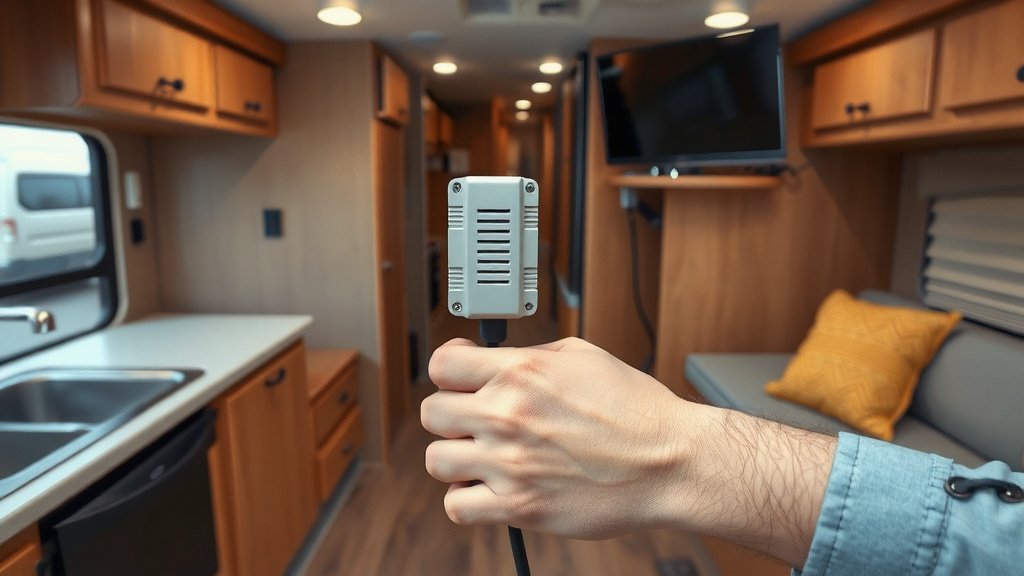
Using a surge protector is easy, but there is a proper sequence. You want to connect the protector to the pedestal first. Then you connect your shore power cord to the protector. This ensures the protector is active before any power flows to your rig.
If you have an EMS, it will run a self-test. It checks the wiring, ground, and voltage. This takes about 15 to 30 seconds. You will see a series of lights or a digital readout showing the status.
Reading the Display and Error Codes
Understanding the display is crucial. A normal reading shows around 120 volts on each line. If you see an error code, do not ignore it. The protector is telling you that the power is unsafe.
Common errors include open ground, reversed polarity, and high voltage. Each one has a specific code. Your protector’s manual will explain what each code means. Many experts say to never bypass these warnings.
What to Do When Your Protector Alarms
When the protector refuses to pass power, something is wrong with the pedestal. Do not try to force it. Do not use a cheater plug to bypass the protection. That defeats the entire purpose and puts your RV at risk.
We found that reporting the issue to the campground office is the best move. They can test and fix the pedestal. Sometimes they will move you to a different site. It is a minor inconvenience compared to a fried electrical system.
Common Myths About Surge Protectors
There are plenty of misconceptions out there. Some people think a surge protector is just an expensive power strip. Others believe that campground power is always safe. We found that neither of these is true.
Another myth is that a surge protector lasts forever. The MOVs inside degrade with each surge they absorb. Over time, they lose their ability to protect. That is why a surge counter is a useful feature to have.
Do You Need One for Every Trip?
Absolutely. You never know when you will hit a bad pedestal. Even at a brand new campground, wiring mistakes can happen. We found that using a protector on every single hookup is the only safe approach.
Think of it like wearing a seatbelt. You do not plan to crash, but you buckle up anyway. The same logic applies to your RV’s electrical system. Plug in protected, or risk paying the price.
Checking Your Protector for Wear and Tear
Your surge protector is not a set-and-forget device. It needs occasional attention. We found that a simple visual inspection goes a long way. Look for cracks in the housing, melted plastic, or discoloration.
If the surge counter has reached a high number, consider replacing the unit. Each surge weakens the MOVs. Eventually, they will fail to clamp a spike. Replacing a worn protector is cheap insurance.
When to Replace Your Surge Protector
There is no set expiration date for these devices. But there are signs that it is time for a new one. If it stops displaying information or fails to power up, replace it. If you see any physical damage, replace it immediately.
We found that most quality units last for years. They are built to handle repeated surges. But they are not indestructible. Treat it as a consumable item, and you will never be caught off guard.
The Bottom Line on Surge Protection
You have invested a lot of money in your RV. The electronics, appliances, and entertainment systems all depend on clean power. We found that a surge protector is one of the smartest investments you can make for your rig.
Do not wait until you experience a problem. By then, it is too late
Conclusion
Your RV is a big investment, and a surge protector is the cheapest way to protect it. We found that campground power pedestals are unpredictable. A single bad hookup can cost you thousands of dollars in repairs. Don’t take that risk.
Start with a basic surge protector if you are on a budget. Step up to an EMS if you want complete protection against low voltage and wiring faults. Either way, plugging in without one is a gamble you don’t need to take. For affordable options, our guide to the best budget RV surge protectors lists top picks.
Get the right unit for your amp service today. Your appliances, your wallet, and your next trip will thank you.
Frequently Asked Questions
Can an RV surge protector be plugged into a generator?
Yes, you can use one with a generator. It will protect your RV from spikes produced by the generator itself. An EMS is especially useful here because it also monitors frequency, which generators sometimes get wrong.
Do I need a surge protector for a brand new RV?
Yes, you absolutely do. A new RV does not make you immune to bad pedestal wiring. In fact, protecting your new rig from day one is the smartest move you can make. It keeps your warranty claims from becoming a nightmare.
How many joules of surge protection do I need for my RV?
We found that you should look for a minimum of 2,000 joules. For a 50 amp rig, aim higher, closer to 3,000 joules or more. A higher joule rating means the protector can absorb more energy before it wears out.
Will a surge protector protect my RV from a lightning strike?
A surge protector can handle small spikes, but a direct lightning strike is a different story. The energy from a direct strike is often too powerful for any portable device to handle. Unplug your RV during severe storms to be truly safe.
Why does my surge protector keep tripping the breaker?
This usually means the pedestal has a wiring problem or you are drawing too much power. The protector is doing its job by shutting things down. Check your power usage first. If that looks normal, the pedestal is likely at fault, and you should ask to move sites.